Male Infertility Market Outlook:
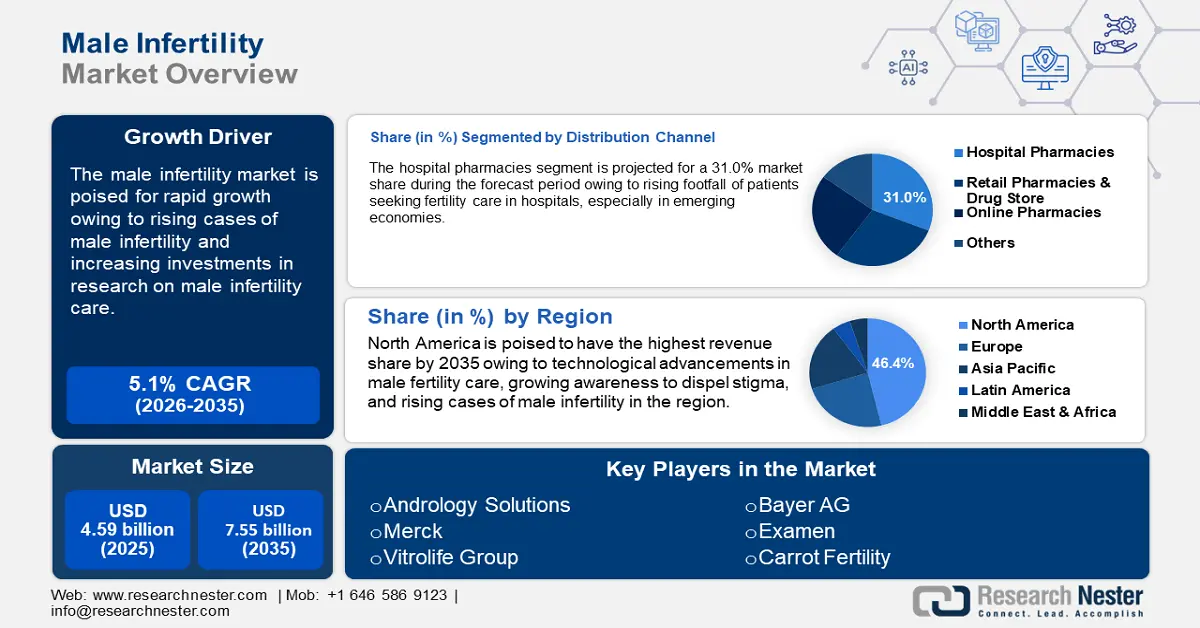
Male Infertility Market size was valued at USD 4.59 billion in 2025 and is set to exceed USD 7.55 billion by 2035, expanding at over 5.1% CAGR during the forecast period i.e., between 2026-2035. In the year 2026, the industry size of male infertility is estimated at USD 4.8 billion.
The male infertility market is poised to witness significant growth owing to increased acceptance of male infertility as a medical condition. The shift in societal attitudes has led to a surge in demand for treatments, diagnostics tests, and support services. As the dissemination of information becomes easier due to rising digitization, more men and couples will become educated about male infertility, further boosting the male infertility market growth.
The World Health Organization (WHO) states low sperm count, abnormal morphology and motility of sperm, and issues in ejaculation are the most common issues for male infertility. Male infertility can be categorized into primary and secondary infertility i.e. primary infertility is when a male has never impregnated a fertile female and secondary infertility is when the male has impregnated a female prior but is unable to do so for the second term. As male infertility cases rise due to unhealthy diets, increasing stress levels, and sedentary lifestyles, the demand for specialized male fertility care is projected to boom.
An Oxford Academic paper estimated male infertility affects 7% of all men. The increased media coverage on news outlets and social media platforms has managed to dispel misconceptions about male infertility. Additionally, celebrity advocacy such as from Gordon Ramsay, Mark Zuckerberg, John Legend, etc., has led to greater penetration in dispelling stigmas associated with male infertility. The percentage of males undergoing fertility tests increases as fertility care improves globally which leads to the remarkable growth of the market revenue share.