Wood Preservatives Market Overlook:
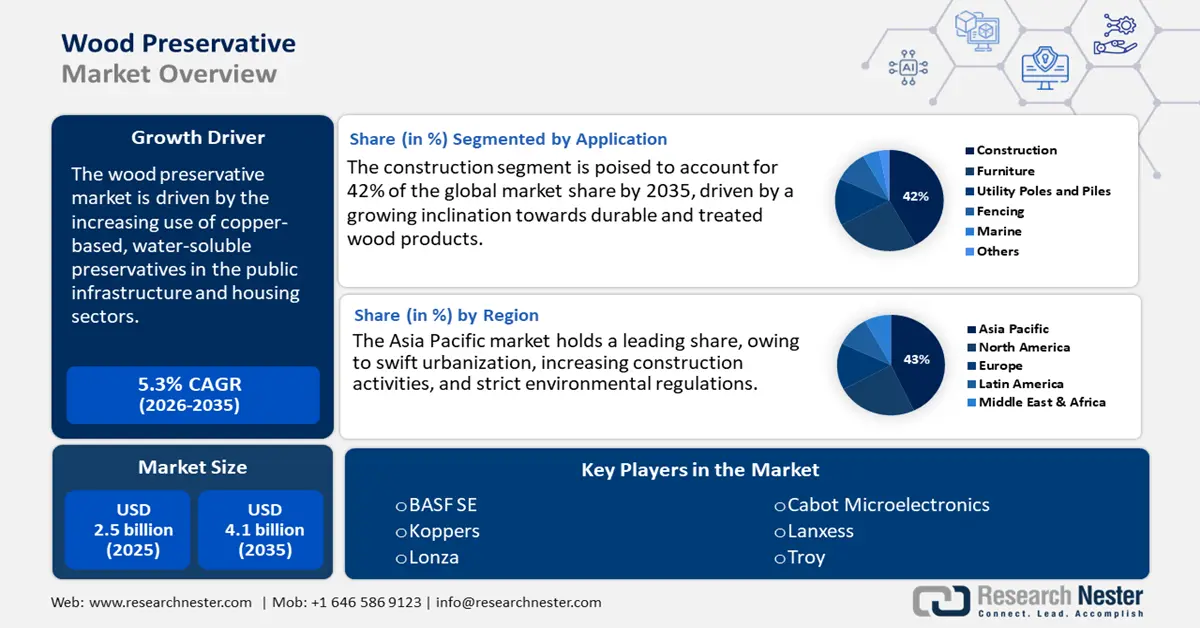
Wood Preservatives Market size was valued at USD 2.5 billion in 2025 and is projected to reach USD 4.1 billion by the end of 2035, rising at a CAGR of 5.3% during the forecast period, i.e., 2026-2035. In 2026, the industry size of wood preservatives is estimated at USD 2.6 billion.
The main factor driving the growth of the market is the increasing use of copper-based, water-soluble preservatives in the public infrastructure and housing structures. This trend aligns with government-led environmental initiatives aimed at phasing out hazardous substances. For example, the U.S. Environmental Protection Agency (EPA) has intensified its compliance monitoring regarding the use of creosote and pentachlorophenol under the Federal Insecticide, Fungicide, and Rodenticide Act (FIFRA), thereby accelerating the transition to safer alternatives. Additionally, the U.S. Department of Agriculture’s Forest Service continues to support research and development into borate-based preservatives for fire resistance and fungal control through its Forest Products Lab initiatives. There is a significant increase in demand for wood across the housing and utility sectors. The Food and Agriculture Organization (FAO) in its 2024 report discloses that the worldwide wood production is at record levels, around 4 billion m³ per year. The same source also states that nearly 5.8 billion people around the globe use non-timber forest products (NTFPs), including 2.77 billion rural people in developing countries. This high use of wood and its products directly propels the consumption of wood preservatives.