Voice Control Smart Home Market - Regional Analysis
North American Market Insights
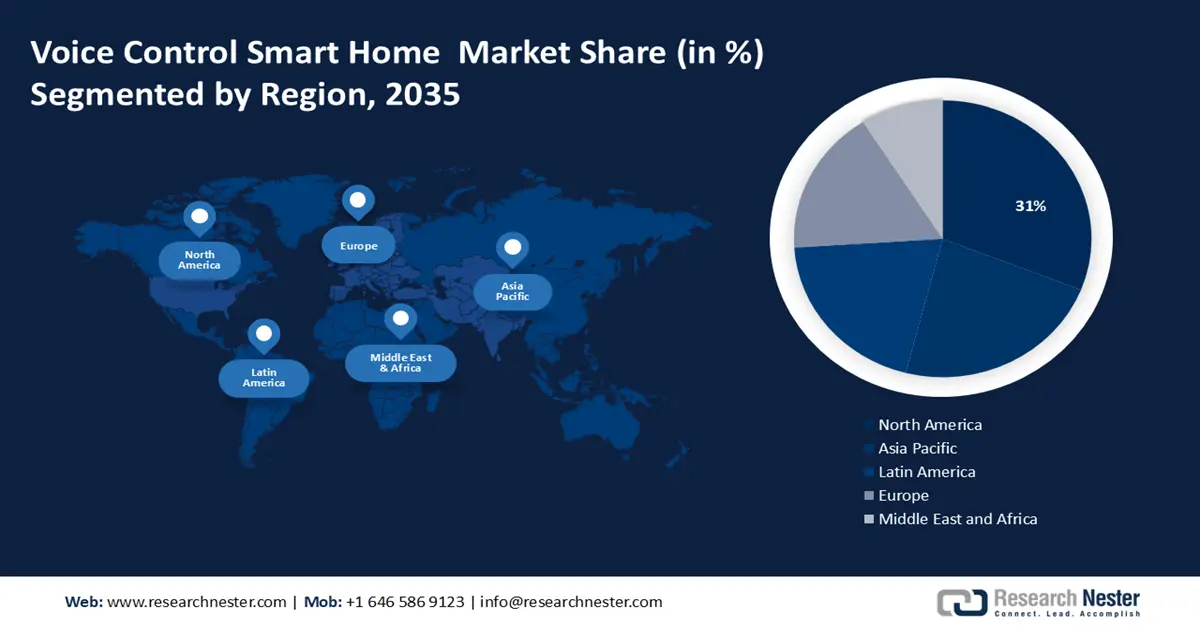
North America industry is predicted to hold largest revenue share of 31% by 2035, Moreover, factors behind this dominance are increasing disposable income, a rise in consumer awareness, and the rapid adoption of IoT. According to a recent report published by IEA in 2022, residents of America can potentially reduce up to 20% of home energy if they start making behavioral adjustments. In the United States, the smart home industry has experienced notable growth, consumers are rapidly switching to smart home solutions to save energy and acquire convenience along with security. As per a recent report, approx. 70 Million US population is actively using smart home devices and these statistics are estimated to rise in the forecast period. Moreover, the ubiquitous presence of voice-controlled devices in households has quickly transitioned from creativity to necessity, inducing market growth. Additionally, widespread adoption of these devices signs about pattern shift in consumer behavior, pushing the market forward.
APAC Market Insights
The Asia Pacific voice control smart home market is estimated to the second largest share of about ~23% by the end of 2035. The countries in this region are doing decent in the smart home sector. For instance, Japan already known for its technological advancements, is expected to grow rapidly in the market as consumers are showing interest in home automation. Moreover, the market in India is providing a money-making opportunity for both domestic and international companies by being an affordable market for smart home solutions. Furthermore, safety is also a most important factor accelerating the growth of smart home devices in the region as consumers are interested in investing their money in something that can bring security and convenience. Additionally, market in the other regions such as Indonesia, is growing at a satisfactory pace, and with the increase in internet penetration, the market here is estimated to see positive outcomes in the future