Vibrator Mesh Nebulizer Market - Regional Analysis
North America Market Insights
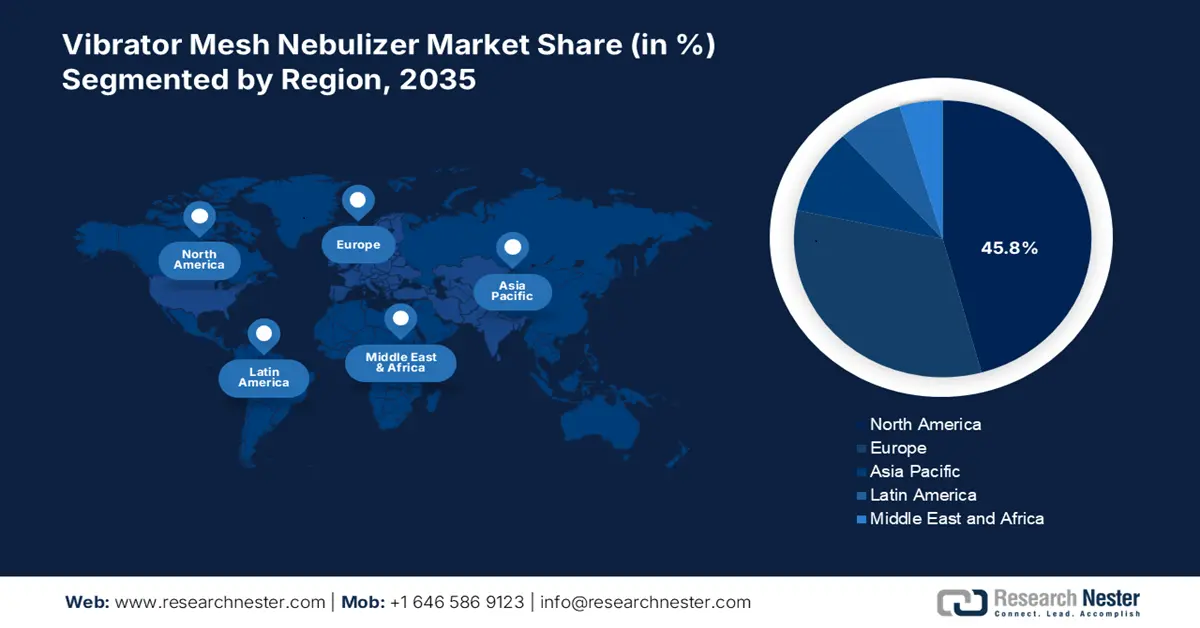
North America in the vibrator mesh nebulizer market is projected to account for the highest share of 45.8% by the end of the forecast timeline. This regional growth is effectively driven by the presence of Medicaid and Medicare coverage acceleration, as well as a surge in asthma and COPD occurrence. According to the American Lung Association, asthma prevalence among adults in 2023 varied from 7.1% in Mississippi to 14.1% in Puerto Rico. The healthcare systems in the U.S. and Canada allow patients to access advanced treatment options, such as vibrating mesh nebulizers. In fact, favorable insurance reimbursement policies significantly reduce costs to patients and make things more affordable and accessible for them. North America also has a good level of awareness of lung disease management among patients and caregivers, and a strong presence of major players and manufacturers of nebulizers. In addition, the region has an identity of home care and portable medical devices, which supports the overall use of vibrating mesh nebulizers in the market.
The growth of the vibrator mesh nebulizer market in the U.S. has been supported by the adoption of telehealth and artificial intelligence-based devices on the rehabilitation continuum, due in part to advanced healthcare infrastructure, wider insurance coverage, and a large cohort of the population suffering from chronic respiratory diseases like COPD and asthma. This also includes rapidly increasing awareness of respiratory health, government support for home healthcare, and highly accepted innovative medical devices among patients and healthcare professionals alike. The presence of major manufacturers in the medical device sector, as well as sustained investment in R&D funds to advance provision and application of vibrating mesh nebulizers across multiple domains supports growth. Therefore, these factors represent just some of the issues leading to innovation 'hubs' better access to vibrating mesh nebulizers. Additionally, this added awareness about respiratory health, government oversight for home healthcare, and acceptance and adoption of innovative medical devices in general have the potential to drive demand for ventilators and nebulizers, vibrating mesh in particular.
The growth in the Canada vibrating mesh nebulizers market is consistently on the rise, with a growth rate of 8.3%, primarily driven by medical and healthcare funding initiatives from provinces. Furthermore, the growth is attributed to having a universal health care system to support funding sources. This is important as Canada has an aging population and an increasing number of people with respiratory issues, leading to increased need and usage. Canada focuses on home care models that prefer portable nebulizers of sufficient efficacy that are sometimes supported through government programs that can assist with the cost. Additionally, the presence of major companies in the medical device industry in Canada allows for better access and continued investment in R&D attains additional applications and experiences with vibrating mesh nebulizers.
Europe Market Insights
Europe in the vibrator mesh nebulizer market is projected to hold a share of 32.5% by the end of the forecast period. The region’s growth is highly fueled by a surge in the elderly population. Moreover, other key trends such as telemedicine integration, along with an expansion in homecare facilities, are also expected to boost the vibrator mesh nebulizer market development in the region. Also, the adoption of strict regulatory regimes guarantees patient access to safe and effective devices and fosters innovation and uptake. The region's emphasis on home-based healthcare and patient-centered treatment complements the portability and usability of vibrating mesh nebulizers. In addition, the significant investments from prominent manufacturers and increasing knowledge and awareness by healthcare professionals and patients support Europe’s strong market.
Germany is positioned intentionally ahead of the rest of the region when it comes to the vibrating mesh nebulizer market, showcasing an impressive 33% share of the revenue due to their incredible healthcare infrastructure and the prevalence of chronic respiratory diseases including: COPD and asthma. Furthermore, patients generally enjoy a universal healthcare system, meaning they can receive sophisticated medical devices without financial burden. Additionally, and not surprisingly, Germany is a leader in financing for medical research and innovation, and provides support and funding for more innovative therapies for respiratory diseases. Meanwhile, the elderly population (65 + years of age) is increasing in size and the portable, easier-to-use nebulizers are an emerging market that enhance compliance and may improve patient quality of life. In summary, each of these scenarios described offers the potential for growth of vibrating mesh nebulizer product utilization in the German market.
The UK vibrating mesh nebulizer market is projected to account for 28.7% of total regional revenue by the end of 2035 due to the National Health Service (NHS) and breadth of coverage. Respiratory disease has seen an upward trend in the UK, partly driven by an aging population along with increased environmental factors, subsequently increasing demands for innovative and more efficient delivery devices. The UK government has recently encouraged home care and the improving patient adherence aligned with the advances of benefits attached to vibrating mesh nebulizer as a form of drug delivery. Increased education amongst health care providers and patients of advances in nebulization technology gives confidence for future growth of the meshed nebulizer market in the UK.
APAC Market Insights
The vibrating mesh nebulizer market is going to dramatically grow in the Asia-Pacific region due to different drivers in the area. The rapid urbanization and industrialization effects on increased air pollution as well as the growing prevalence of respiratory diseases such as asthma and COPD result in a greater need for inhalational therapies and subsequently a larger patient cohort. The increasing investment in healthcare infrastructures across many Asia-Pacific countries, which ultimately facilitates access to medical devices, including more advanced nebulizers will expand the patient populations using these devices. The increase in disposable incomes for growing middle-class populations and a shift in perceptions of respiratory health will create demand for modern, portable, and improved nebulizers. The expansion of governmental initiatives, and healthcare reimbursement programs to support the better management of chronic diseases will assist in the penetration of the traditional patient populations.
India is expected to capture a sizeable share of the vibrating mesh nebulizer market due to its rapidly growing population and high prevalence of respiratory diseases. India has continued to experience considerable improvements in healthcare access, including increased access to new medical technologies, particularly in urban and semi-urban settings. National healthcare programmes such as Ayushman Bharat have driven individual healthcare coverage and treatment affordability in India. Moreover, growing awareness in respiratory matters, and the uptake of care/health solutions with the individual at home has solidified demand for portable and convenient nebulizers. This growing demand will provide momentum for India to become the largest growth market in the region.
China has a substantial share of the vibrating mesh nebulizer market because of its vast population and a high burden of chronic respiratory disease due to pollution and smoking. China is also making significant investments to build health infrastructure, as well as modernizing the current health system. As such, the availability of high-tech respiratory devices in rural and urban areas is favorable. Coupled with increasing disposable incomes and rising awareness of health issues, patients are turning to more efficient and convenient nebulizer technologies.