Synthetic Bone Graft Substitutes Market Outlook:
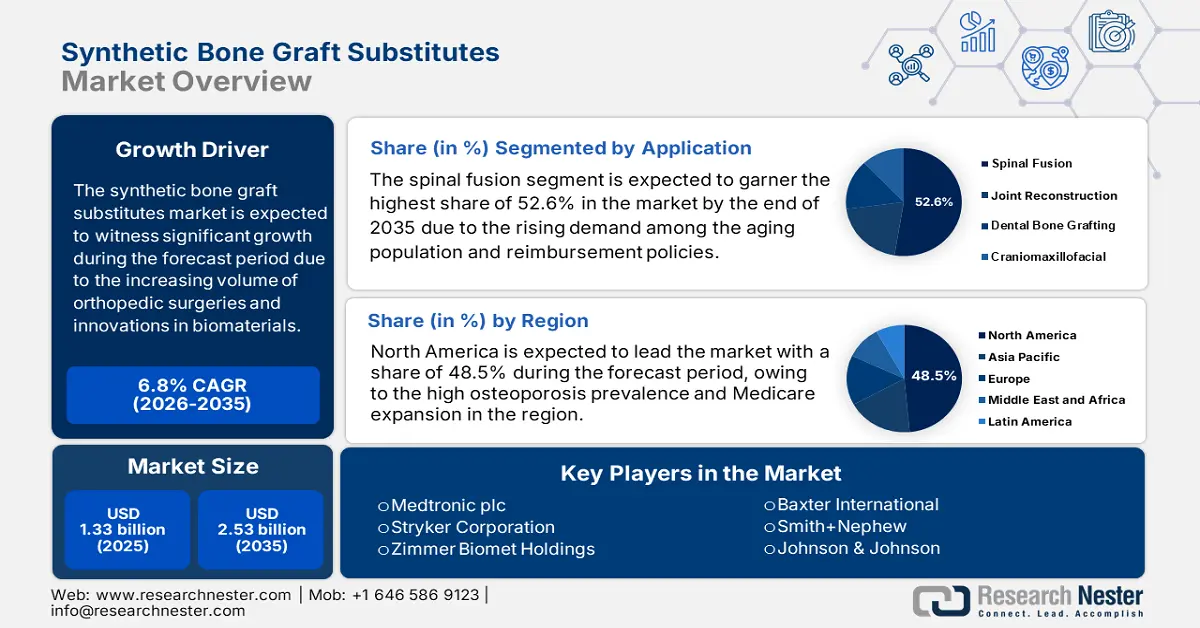
Synthetic Bone Graft Substitutes Market size was valued at USD 1.33 billion in 2025 and is projected to reach approximately USD 2.53 billion by the end of 2035, rising at a CAGR of 6.8% during the forecast period, i.e., between 2026-2035. In 2026, the industry size of synthetic bone graft substitutes is estimated at USD 1.42 billion.
The upliftment of the market highly relies upon the increasing volume of orthopedic surgeries, innovations in biomaterials, and the growing burden of bone-related disorders. Besides, the patient pool necessitating synthetic bone graft substitutes is significantly influenced by the increasing instances of trauma, osteoporosis, and orthopedic surgeries. In this regard, according to a 2022 WHO report, musculoskeletal conditions affect more than 1.71 billion people worldwide. Additionally, according to the Bone Health & Osteoporosis Foundation, an additional 44 million Americans have inadequate bone density, putting them at higher risk, while about 10 million Americans suffer from osteoporosis. This heightened consumer base is evidence of an increased demand for synthetic bone graft substitutes.
Moreover, the global market is evolving in a dynamic way across the globe as a result of ongoing innovation, increasing demand for minimally invasive interventions. One of the most important trends driving this development is the accelerated rate of new product innovation in terms of bioceramics, biomaterial nanotechnology, and hybrid grafts. Companies such as Medtronic, Stryker, Zimmer Biomet, and Arthrex have paved the way forward in synthetic grafts, enhancing osteoconductivity, mechanical strength, and healing time while closely resembling native bone. Most importantly, advancements in the application of nanomaterials, biomimetics, 3D printing, and tissue engineering will create a new level of graft bioactivity, cell adhesion.