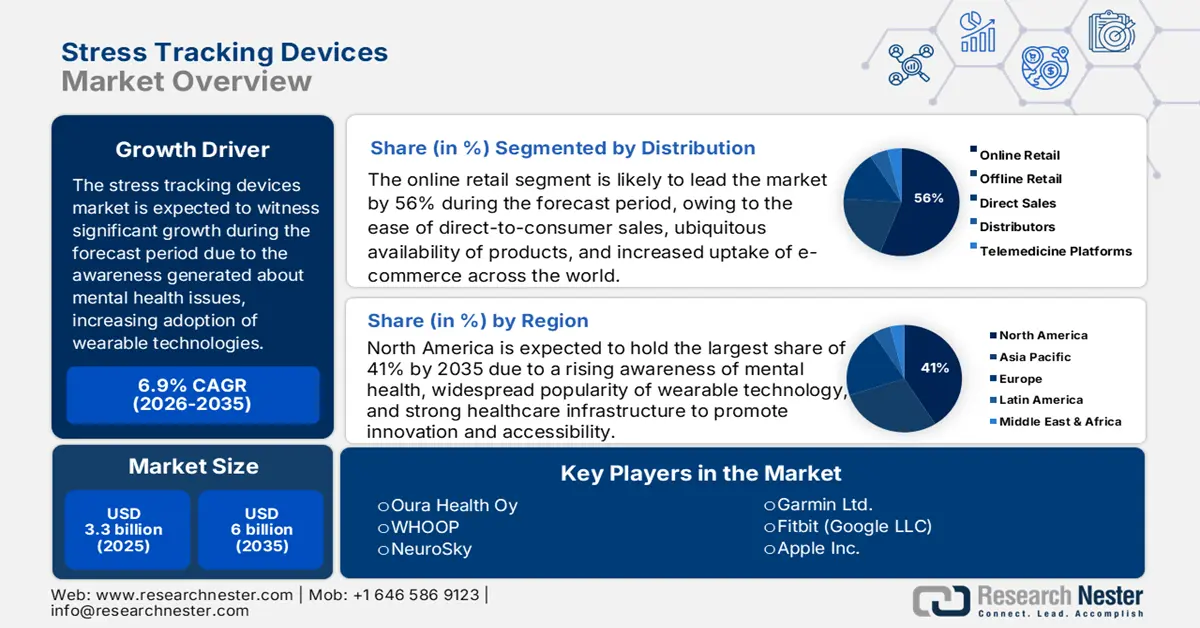
Stress Tracking Devices Market Outlook:
Stress Tracking Devices Market size is valued at USD 3.3 billion in 2025 and is projected to reach USD 6 billion by the end of 2035, rising at a CAGR of 6.9% during the forecast period, i.e., 2026-2035. In 2026, the industry size of stress tracking devices is estimated at USD 3.5 billion.
The global market is experiencing significant growth due to the awareness generated about mental health issues, increasing adoption of wearable technologies, and enhancements in sensor precision and AI-enabled analytics. According to recent data from the U.S. Bureau of Labor Statistics, in October 2024, the consumer price index (CPI) for medical care services in U.S. urban areas showed slight fluctuations, with seasonally adjusted changes ranging from 0.3% in July to a high of 0.7% in September, resulting in an unadjusted increase over the last months leading up to October 2024. Additionally, the index for doctors’ services increased 0.5% in October. This reflects growing consumer interest in purchasing health monitoring devices. The demand is also rising due to an expanding buyer base seeking personalized stress management tools. Interoperability and seamless data sharing between stress tracking devices and management platforms are expected to be essential for delivering integrated health insights and improved user outcomes.
The growth of the market is driven by the advanced wearable devices integrated with sophisticated software for continuous stress monitoring and individualized feedback. According to a report by OEC August 2025, during 2023, the global trading volume of medical instruments reached USD 167 billion, marking a 7.8% increase from the previous year, when trade stood at USD 155 billion. This highlights the growing demand for new health technologies, such as stress-tracking devices. As consumers focus more on mental wellness, the use of these devices is rapidly increasing at both individual and clinical levels. Improvements in sensor accuracy and the use of data analytics are also enhancing device performance and user experience, further boosting market growth. These factors are driving the dynamic expansion and significant investment in the market.