Smart Meter Market Outlook:
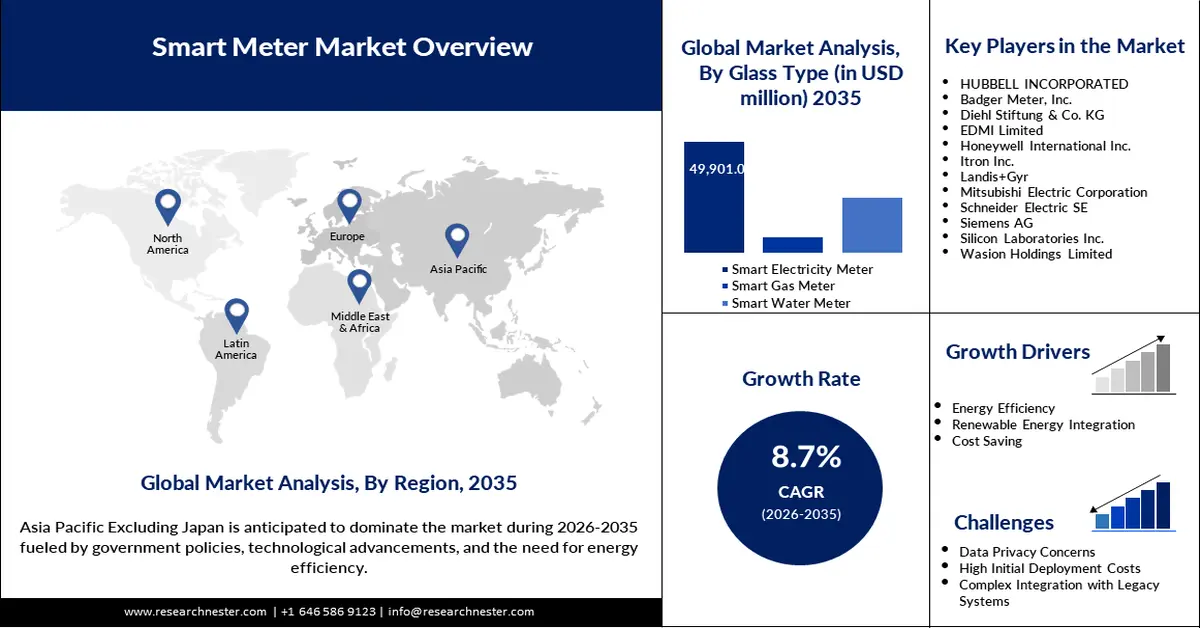
Smart Meter Market size was valued at USD 27.17 billion in 2025 and is set to exceed USD 62.57 billion by 2035, registering over 8.7% CAGR during the forecast period i.e., between 2026-2035. In the year 2026, the industry size of smart meter is estimated at USD 29.3 billion.
The smart meter market is expanding rapidly due to the shift to digital networks, the integration of renewable energy sources, and the pursuit of energy efficiency. Both governments and utility providers have been increasing their spending on smart grid technologies for better energy delivery and usage. In June 2023, Moldova’s Ministry of Energy, together with the UNDP, initiated a pilot project on the introduction of smart electricity meters, which shows the process of digitalization of the energy industry. This is a move towards the improvement of energy management, curtailment of wastage of energy, as well as the realization of national energy efficiency targets through the use of real-time monitoring and automated billing systems. However, the growing emphasis on renewable energy integration to enhance DER management and control also drives market growth.
The use of smart meters in residential, commercial, and industrial sectors is anticipated to rise considerably as a result of the growing need for real time energy management, improved grid stability, and efficient maintenance scheduling. Adani Energy Solutions announced in January 2024 that it aimed to control 25.0% of the country’s smart meter market by focusing on large orders from distribution companies. This aggressive expansion is due to the growing use of smart metering systems, which enhance efficiency, combat energy theft, and meet international goals and governmental regulations. The growing number of smart city projects across the globe escalates the demand for smart meters for effective energy management and evidence-based decision-making among utilities.