Smart Lock Market Regional Analysis:
North American Market Insights
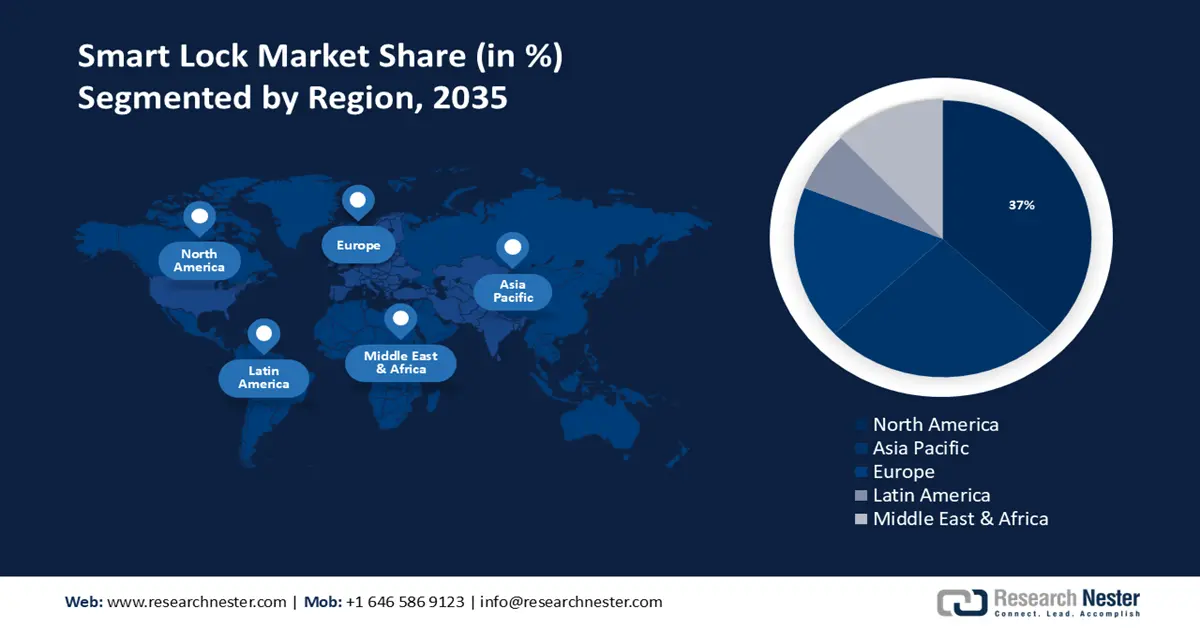
North America region is estimated to hold the largest revenue share, amounting to 37% of the global smart lock market share. The region’s growth is attributed to advancements in smart lock technology. This is a result of widespread technology use and the swift growth of smart homes in the United States. The combination of consumers' strong purchasing power and growing safety concerns especially in critical infrastructure and home applications has led to a legislative climate that is conducive to their adoption. Additionally, the growing adoption of smart cities and homes is presenting significant future opportunities for companies in market. The increase in the demand for smart home appliances with energy efficiency and convenience is boosting the North American market.
APAC Market Insights
Asia Pacific smart lock market is established to attain a significant market share over the forecast period. The enormous number of smartphone users in the Asia-Pacific area and the easy access to the internet in the region's growing economies particularly in China, Japan, and India are credited with the market's notable rise. These smart locks are primarily integrated with the Internet of Things (IoT), which allows objects to be connected. The connectedness of objects which serves as a key internet connection for household items like door locks, fans, and lights, among others has been further accelerated by the sharp rise in smartphone usage.
Besides this, the well-established technological infrastructure, high consumer awareness, growing security concerns, increased government support from China, India, and Japan, and significant investment from major IoT players are all contributing factors to the growth of the smart locks market in the Asia-Pacific region. The main drivers of the market demand in this region are the following: growing net household disposable income and urbanization, increased awareness of automated solutions, quick uptake of internet-based services, advancements in broadband and communication technology, and early uptake of the smart home concept in both the Chinese and Indian markets.