Sleep Apnea Devices Market Outlook:
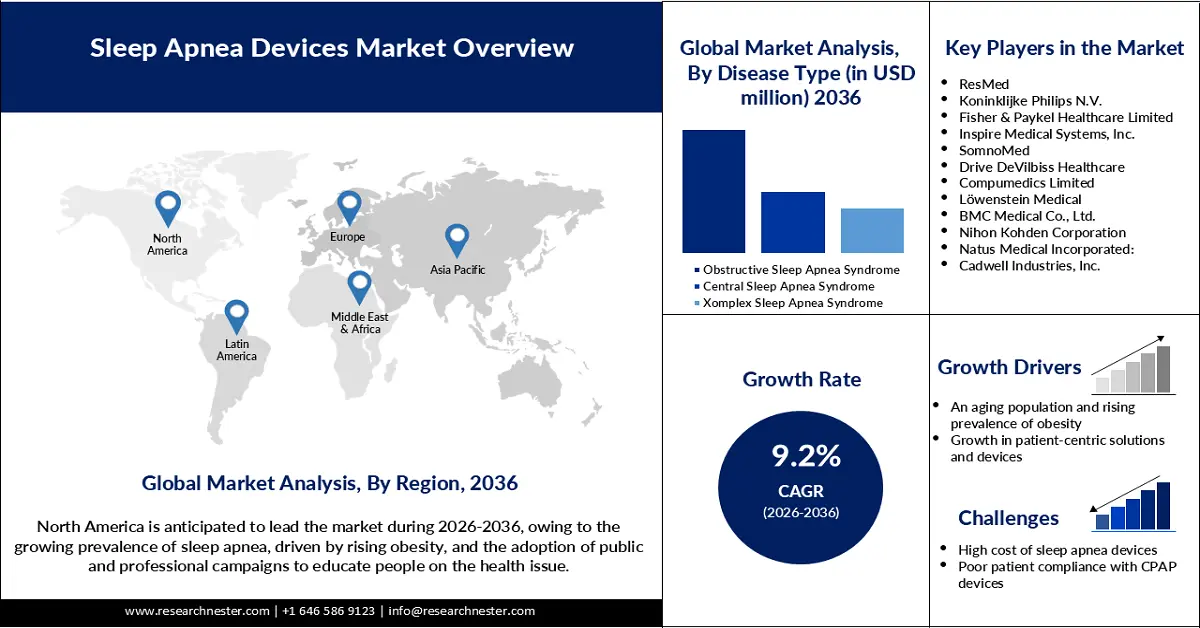
Sleep Apnea Devices Market size was valued at USD 8.9 billion in 2025 and is expected to reach USD 21.4 billion by the end of 2036, registering a CAGR of 9.2% during the forecast period, i.e., 2026-2036. In 2026, the industry size of sleep apnea devices is evaluated at USD 9.7 billion.
The rising prevalence of sleep apnea globally, influenced by factors such as obesity, an aging population, comorbidities, and others, is expected to fuel the market growth. As reported by the National Institutes of Health (NIH) in April 2025, the prevalence of obstructive sleep apnea OSA ranges from 9% to 38% among adults. With the rising prevalence of sleep apnea, the demand for sleep apnea devices, such as CPAP, BiPAP, MADs, and TRDs, is likely to increase in the coming years. Hospitals and other healthcare centers are focusing on adopting modern sleep apnea devices to cater to the increasing number of patient admissions.
Continuous innovation in the industry is leading to the development of increasingly compact and user-friendly sleep apnea devices. Patient outcomes have started improving due to features, such as auto-adjusting pressure, heated humidification, and others, in the newly developed sleep apnea devices. In March 2024, ResMed launched the AirFit F40, a full-face and ultra-compact mask, providing the comfort of smaller masks while helping to improve sleep apnea therapy compliance. The device has features, such as a personal therapy assistant and care check-in, engineered for the provision of personalized assistance to the users of PAP.