Silicon-based Electrical Bushing Market Outlook:
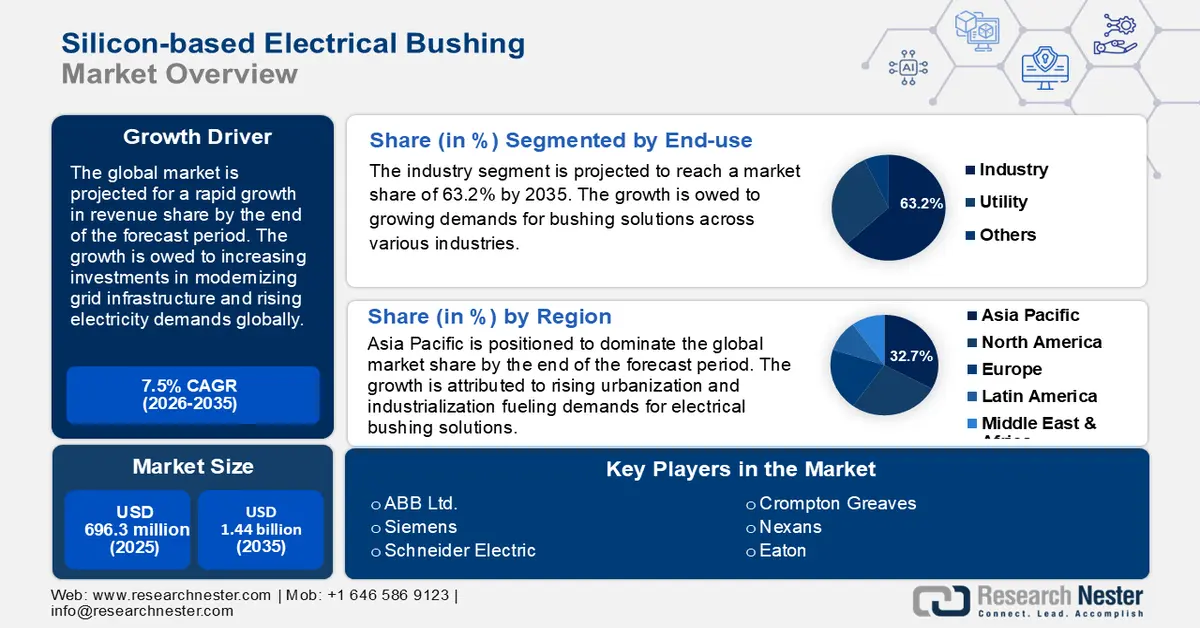
Silicon-based Electrical Bushing Market size was over USD 696.3 million in 2025 and is poised to exceed USD 1.44 billion by 2035, growing at over 7.5% CAGR during the forecast period i.e., between 2026-2035. In the year 2026, the industry size of silicon-based electrical bushing is estimated at USD 743.3 million.
The market’s profitable growth curve is attributed to rising demands for reliable insulation material in various industries, such as power generation, transmission, and distribution. Silicone bushings offer advantages such as superior insulation, durability, and low maintenance that increase adoption rates in electrical equipment. Advancements in silicone rubber boost the durability of silicone-based bushing enabling them to be positioned as premier insulation solutions.
The global increase in demand for electricity fuels the need for robust installation solutions for efficient operation of electrical equipment. For instance, the International Energy Agency estimates the global demand for electricity to rise at an average of 3.4% annually from 2023 to 2026. An increased demand for electricity correlates with the expansion of power generation capacity and necessitates the need to upgrade existing power grids with new equipment. This boost demands for bushings to be integrated into power grids and substations. Additionally, the rapid growth of the electric vehicle market fuels the expansion of charging infrastructure that necessitates robust bushing insulation solutions. By the end of the forecast period, emerging economies are poised to provide profitable opportunities to the silicon-based electrical bushing market owing to rapid urbanization and industrialization.
The global push to integrate renewable energy solutions assists the rapid expansion of the market. This benefits the market due to the increased emphasis on the development of solar, wind, and hydroelectric power generation systems. Silicone-based bushings are essential components in these systems owing to their dielectric strength and ability to withstand high voltage. Additionally, renewable sources of energy have pushed the installation of remote microgrids that require silicone-bushing insulation solutions for high-voltage terminals. With increasing investments in research and development to improve silicone formulations and push to adopt eco-friendly materials, the silicon-based electrical bushing market is positioned to maintain its profitable growth curve by the end of 2037.