RNase Control Market - Regional Analysis
North American Market Insights
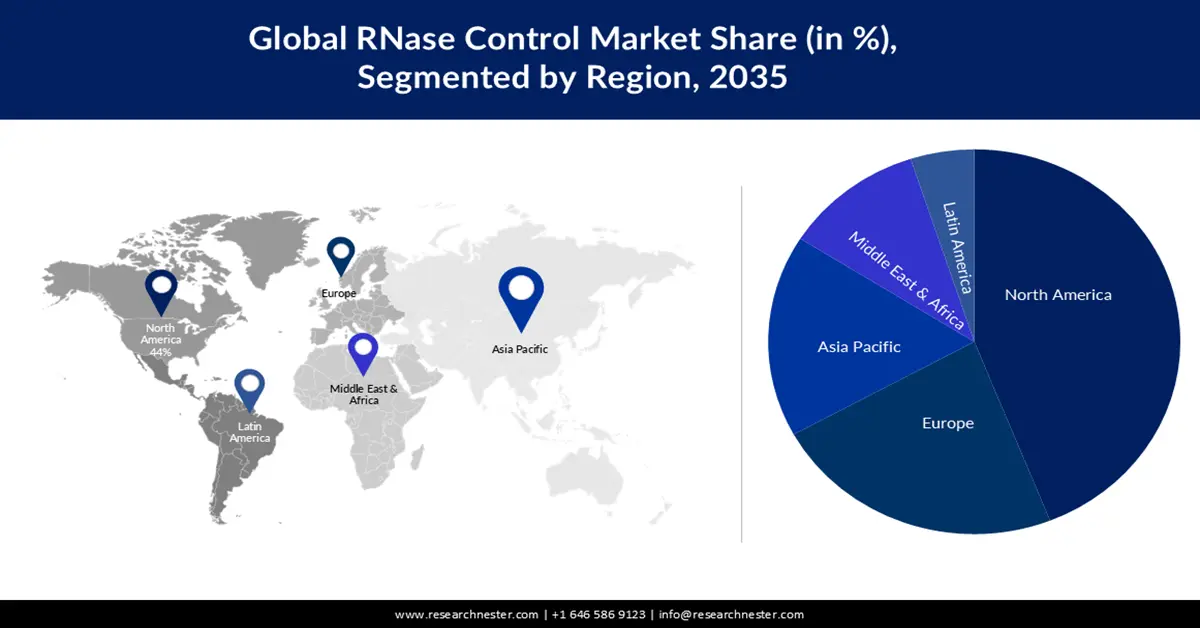
In RNase control market, North America region is projected to account for considerable revenue share by the end of 2035. The robust growth of technology and increased cooperation in the gene sector are mainly to blame for this increase. Due to the prevention of degradation or contamination of RNA, these products have been widely applied in this area.
In addition, market growth in North America is driven by increased R&D and investment in the gene sector. For example, in October 2021, the US Food and Drug Administration, the National Institutes of Health, pharmaceutical companies, and five not-for-profit organizations joined forces to increase the research and development of gene therapy, which benefits approximately 30.0 million Americans.
The rising incidence of diseases, particularly genetic diseases, has led to extensive use of techniques such as polymerase chain reaction (PCR), which relies on RNase Control. A significant driver of the US RNase control market growth is this increased use in genetic research and disease diagnosis. The prevalence of reported genetic disorders in children aged 0 to 17 years in the United States was approximately 0.039, representing approximately 2.8 million children, according to a study based on a combined national survey of children's health conducted in 2016.
Canada is addressing the problem of RNase contamination by using specific decontaminants, strictly adhering to laboratory protocols, and focusing on preventing contamination from a variety of sources. By minimizing the impact of RNase contamination in laboratory settings, these measures aim to ensure the integrity of research and diagnostic procedures.
European Market Insights
Europe region in RNase control market is likely to capture substantial revenue share by 2035. Its important role in molecular biology, especially the prevention of RNA degradation during cDNA synthesis, RT-PCR, RNA purification, and other processes, is leading to a growing need for RNase Control across Europe. This is important because RNase contamination can be difficult to detect and may lead to the destruction of studies.
The growth of the RNase control market in the United Kingdom is supported by demand from all application sectors, as well as regulations that are favourable to regulators. In addition, the dynamics of demand for RNase Control are influenced by a broad range of options available from market players.
In Germany, a number of health compliance regulations apply to cooperation between the medical sector and healthcare professionals. This Regulation shall also apply to all cooperation and business activities in the digital health sector, indicating a regulatory framework that influences the adoption and use of healthcare-related products and technologies, including the control of RNase.
The increasing incidence of diseases, including genetic disease, has led to extensive use of methods for controlling RNase in France despite the disruption caused by the COVID-19 pandemic. The market for RNase Control in the country is likely to be driven by this trend.