Reverse Logistics Market Size

  • Report ID: 6267
  • Published Date: Sep 17, 2025
  • Report Format: PDF, PPT

Reverse Logistics Market Outlook:

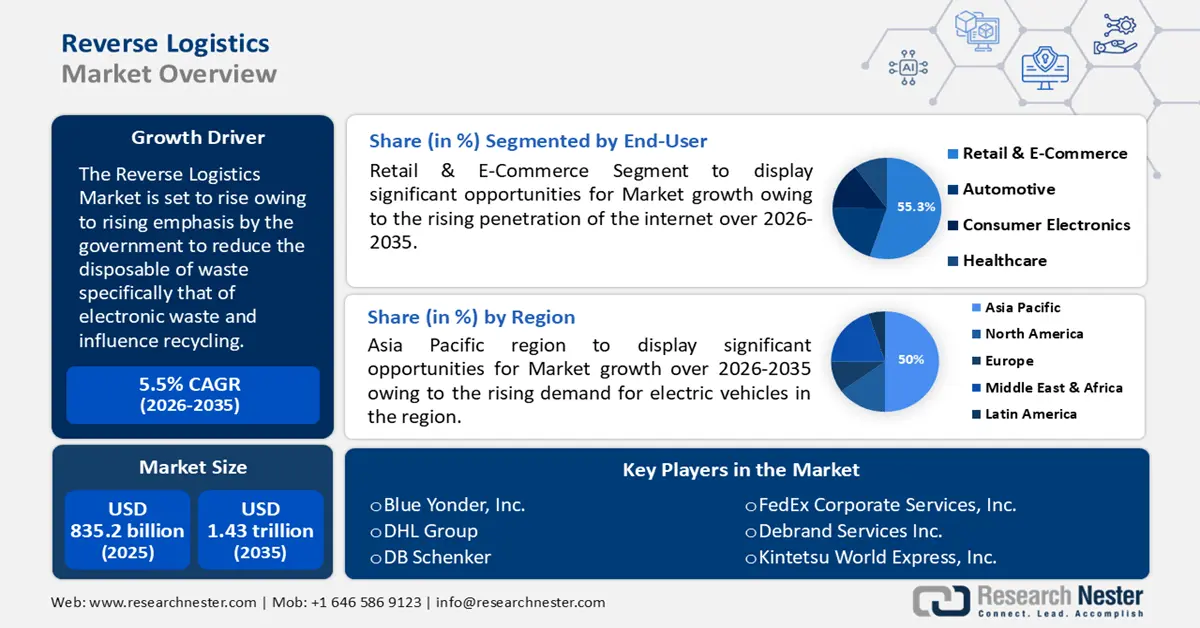
Reverse Logistics Market size was valued at USD 835.2 billion in 2025 and is expected to reach USD 1.43 trillion by 2035, expanding at around 5.5% CAGR during the forecast period i.e., between 2026-2035. In the year 2026, the industry size of reverse logistics is evaluated at USD 876.54 billion.

The market growth is expected to be encouraged by rising emphases by the government to reduce the disposal of waste, specifically electronic waste, and influence recycling. A 2024 study by the United Nations Institute for Training & Research stated, over 62 million tonnes (Mt) of e-waste were disposed off in 2022 in the environment which is the highest by about 82% as compared to 2010 across the globe. Therefore, the government plays a key role in building reverse logistics infrastructure through funding, facilitating, and incentivizing, along with the strict rules, and regulations related to the product standard.


Reverse Logistics Market Size

Browse key industry insights with market data tables & charts from the report:

Frequently Asked Questions (FAQ)

In the year 2026, the industry size of reverse logistics is evaluated at USD 876.54 billion.

The global reverse logistics market size exceeded USD 835.2 billion in 2025 and is set to expand at a CAGR of over 5.5%, surpassing USD 1.43 trillion revenue by 2035.

The Asia Pacific reverse logistics market is anticipated to capture 50% share by 2035, driven by rising electric vehicle registrations.

Key players in the market include FedEx Corporation, United Parcel Service, Inc. (UPS), DHL Supply Chain, XPO Logistics, Inc., C.H. Robinson Worldwide, Inc., DB Schenker, Kuehne+Nagel International AG, CEVA Logistics, Ryder System, Inc., Reverse Logistics Group (RLG).
Inquiry Before Buying Request Free Sample PDF
footer-bottom-logos