Quantum Computing in Automotive Market Outlook:
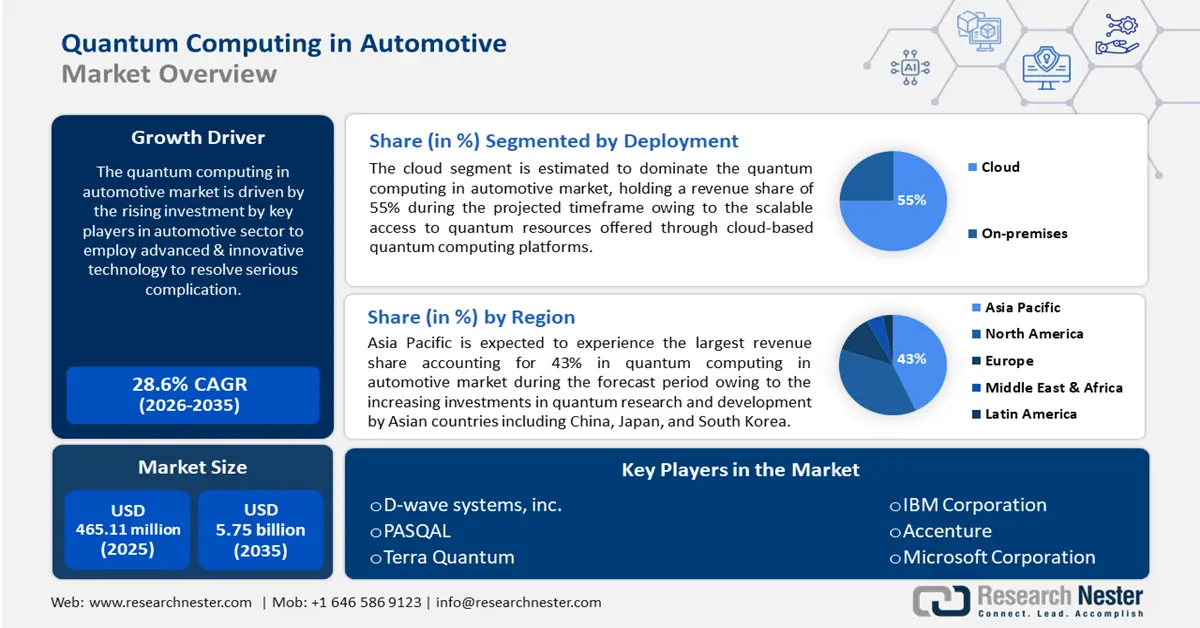
Quantum Computing in Automotive Market size was valued at USD 465.11 million in 2025 and is likely to cross USD 5.75 billion by 2035, expanding at more than 28.6% CAGR during the forecast period i.e., between 2026-2035. In the year 2026, the industry size of quantum computing in automotive is assessed at USD 584.83 million.
The automotive industry players have identified the potential of quantum computing in revolutionizing vehicle design, manufacturing, and operations. Modern connected cars are becoming progressively complex with their expanding ecosystem of processors, sensors, and communication systems. This has implored car manufacturers (OEMs) to highlight the pressing need for efficient quantum computing applications in the automotive sector. The industry is leveraging the latest developments in complex optimization problems, quantum simulation, and sophisticated quantum AI and machine learning to strengthen automobile manufacturing processes.
Quantum computing is projected to impact the development of advanced materials used in automotive manufacturing. OEMs and Tier 1 suppliers employ this technology to modify the behavior of atoms and molecules to develop new materials with customized properties, including enhanced strength and better electrical conductivity. This is anticipated to streamline the production of durable and advanced vehicle components during the forecast period. The integration of quantum computing is expected to enable the transitions toward autonomy and electrification of vehicles, giving the market players a competitive edge. Three main application areas of particular interest to automotive companies are image classification, logistics optimization, and battery chemistry.