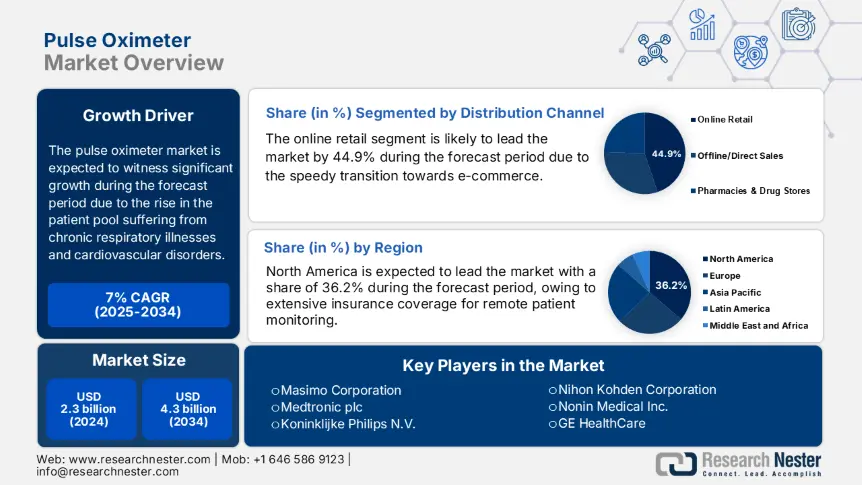
Pulse Oximeter Market Outlook:
Pulse Oximeter Market size was valued at USD 2.3 billion in 2024 and is projected to reach USD 4.3 billion by the end of 2034, rising at a CAGR of 7% during the forecast period, i.e., 2025-2034. In 2025, the industry size of pulse oximeter is assessed at 2.5 billion.
The global market is driven by the rise in the patient pool suffering from diseases such as chronic respiratory illnesses, cardiovascular disorders, and post-operative complications. According to a World Health Organization (WHO) report, nearly 262.5 million people are affected by chronic obstructive pulmonary disease and require continuous blood oxygen monitoring during hospitalization. However, the requirement for long-term SpO₂ monitoring is also increased among the rising geriatric populations and post-COVID syndrome patients. As per the Centers for Medicare & Medicaid Services data, the rise in remote patient monitoring has increased to 49.3% in 2023, impacting the institutional adoption of devices such as pulse oximeters.
On the supply chain side, the pulse oximeters are manufactured using sensors, microcontrollers, and medical-grade plastic components. Pulse oximeters are mainly imported from Malaysia, Germany and China. The U.S. imported these monitoring devices from China reaching USD 780.4 million in 2023 which is nearly a 60.4% of the total imports. This value impacts the supply chain concentration risks. The producer price index rose to 4.4% in 2024 for electromedical equipment, whereas the consumer price index increased to 1.9% for medical equipment and supplies, impacting the inflation passed to buyers in healthcare institutions. The research and development in pulse oximeters are moderate and are implementing various innovative methods, such as AI-enabled anomaly detection, to enhance the accuracy during monitoring.