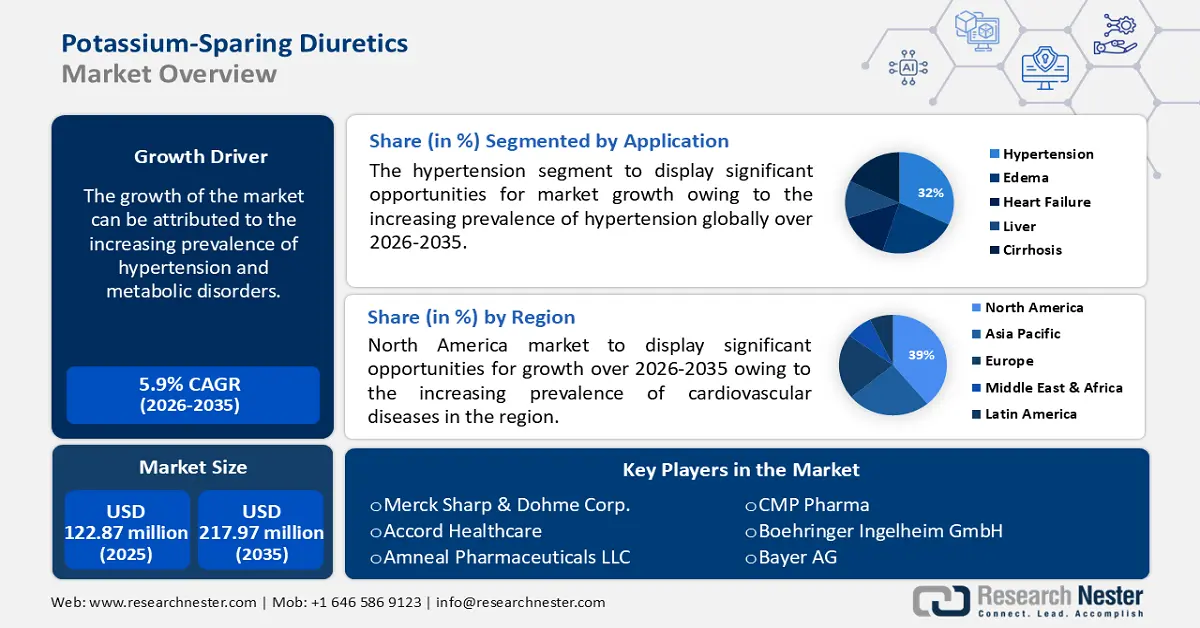
Potassium-Sparing Diuretics Market Outlook:
Potassium-Sparing Diuretics Market size was valued at USD 122.87 million in 2025 and is likely to cross USD 217.97 million by 2035, registering more than 5.9% CAGR during the forecast period i.e., between 2026-2035. In the year 2026, the industry size of potassium-sparing diuretics is estimated at USD 129.39 million.
The growth of the market can be attributed to the increasing prevalence of hypertension and metabolic disorders. According to WHO statistics, nearly 1.28 billion adults aged 30–79 worldwide suffer from hypertension, the majority (80%) living in low- and middle-income countries. According to the CDC, nearly half of Americans (46 percent, or 116 million) suffer from hypertension, which is defined as a systolic blood pressure over 130 mmHg or a diastolic blood pressure over 80 mmHg or are taking hypertension medications. Potassium-sparing diuretics help to reduce blood pressure by increasing the amount of potassium in the body. This helps to reduce the levels of sodium in the bloodstream, which in turn reduces the amount of fluid in the body and thus the pressure of the blood on the walls of the blood vessels.
In addition to these, factors that are believed to fuel the market growth of potassium-sparing diuretics include the increasing demand for better healthcare and innovations in the drug delivery system. Moreover, the growing number of investments in the healthcare sector and increased awareness of the availability and importance of these medications are also expected to contribute to market growth. The United States spent more than 17 percent of its GDP on healthcare in 2021. Nearly USD 28 billion was invested in the Indian healthcare sector between April 2000 and December 2021. Governments around the world are investing heavily in healthcare infrastructure and services, which is contributing to increased awareness of health and wellness, and in turn, driving the demand for potassium-sparing diuretics for a variety of ailments.