Post-traumatic Stress Disorder Treatment Market Outlook:
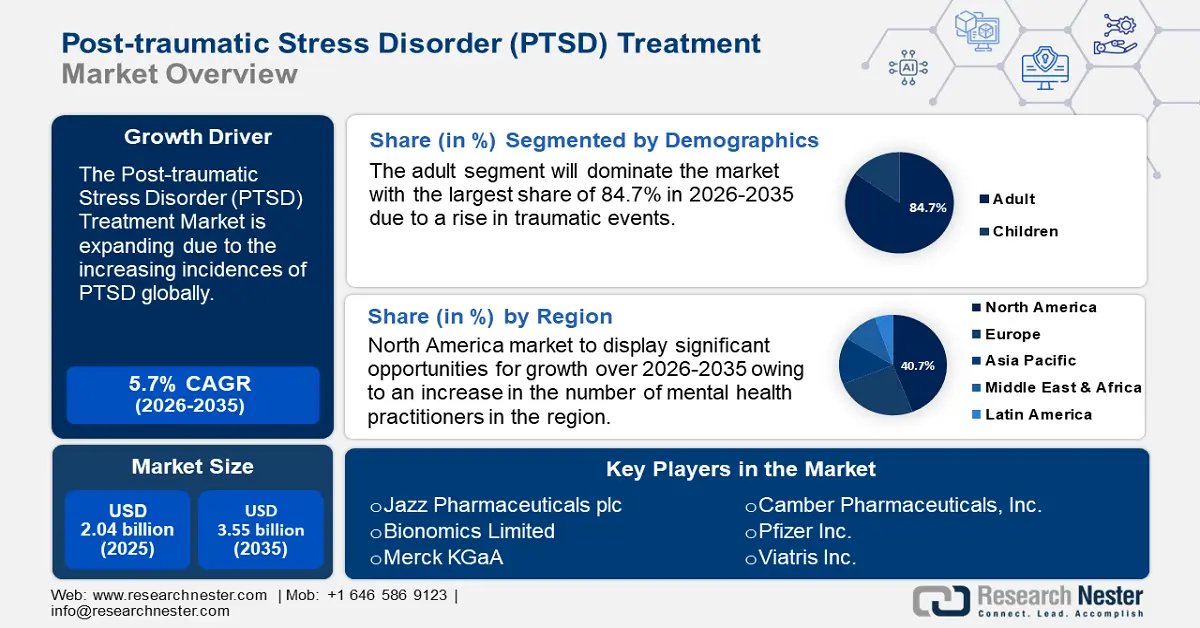
Post-traumatic Stress Disorder Treatment Market size was over USD 2.04 billion in 2025 and is anticipated to cross USD 3.55 billion by 2035, growing at more than 5.7% CAGR during the forecast period i.e., between 2026-2035. In the year 2026, the industry size of post-traumatic stress disorder treatment is assessed at USD 2.14 billion.
The PTSD treatment market is expanding mainly due to the growing advancements in therapies and the increasing prevalence of the condition. In 2024, the World Health Organization (WHO) stated that PTSD is projected to have affected 3.9% of people worldwide at some point in their lives. There is a rising prevalence of PTSD due to factors such as rising global conflicts, natural disasters, and the growing awareness of mental health issues.
Growing advancements in therapeutic options, including pharmacological treatments and evidence-based therapies such as cognitive behavioral therapy (CBT) and eye movement desensitization and reprocessing (EMDR), are also contributing to post-traumatic stress disorder (PTSD) treatment market growth. Additionally, increased investment in mental health initiatives and destigmatization of mental health care further enhance treatment accessibility and demand. For instance, the WHO's Special Initiative for Mental Health, neurological, and substance use conditions aims to address and move people with these illnesses toward universal health care. The initiative covers nine countries across six regions: Argentina, Bangladesh, Ghana, Jordan, Nepal, Paraguay, the Philippines, Ukraine, and Zimbabwe.
As of 2023, more than 52 million people had access to newly available local services. This massive expansion was achieved with modest financial investments; the total expenditures for the initiative so far are accounted to be USD 25 million. Thus, for every USD 1 million spent, more than two million people gain access to newly available mental health services in their areas.