Polymer Concrete Market Outlook:
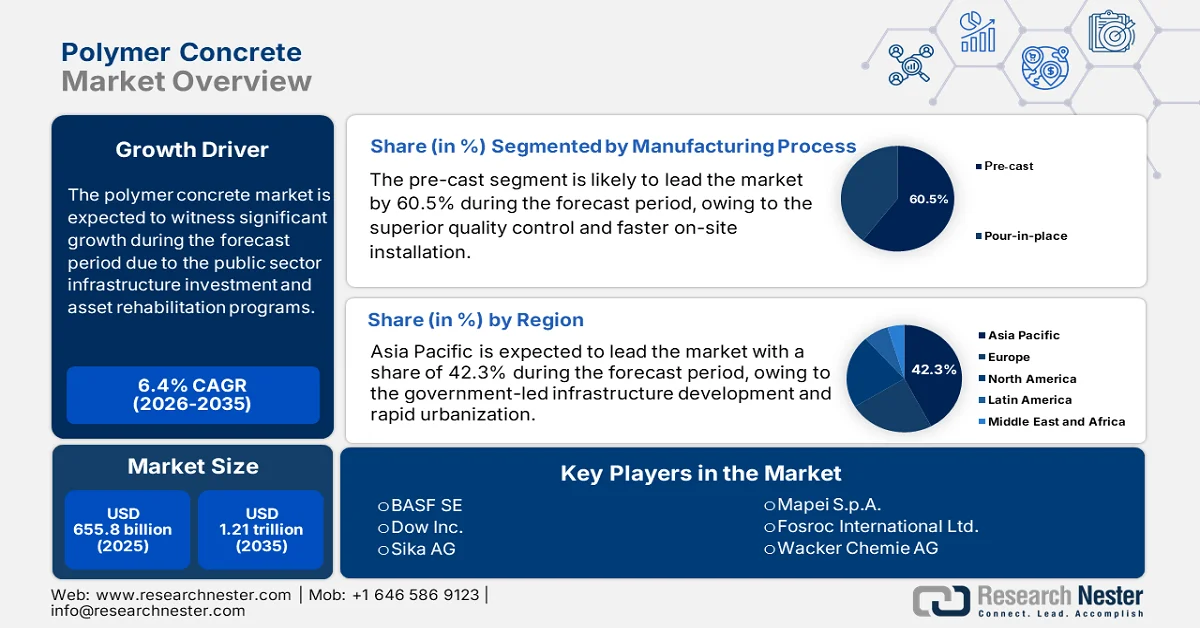
Polymer Concrete Market size was valued at USD 655.8 billion in 2025 and is projected to reach USD 1.21 trillion by the end of 2035, rising at a CAGR of 6.4% during the forecast period, i.e., 2026-2035. In 2026, the industry size of polymer concrete is estimated at USD 697.7 billion.
The public sector infrastructure investment and asset rehabilitation programs are the primary growth drivers of the polymer concrete market across various sectors, such as water transport and industrial facilities. Further, the factors such as chemical resistance and superior durability, reducing long-term maintenance costs, are driving the adoption of the polymer concretes. According to the U.S. Department of Transportation data in February 2023, USD 550 billion was allocated in new federal spending, including USD 110 billion for roads and bridges, with a significant share allocated to repair, resurfacing, and structural rehabilitation rather than new builds. Besides, the Alliance for Innovation and Infrastructure report in June 2024 shows that nearly 42% of the U.S. bridges are 50 years old, and 7.5% bridges are structurally deficient, driving demand for rapid-setting, corrosion-resistant repair materials used in deck overlays, joint repairs, drainage components, and precast systems.
Similarly, the World Institute Resource data in May 2022 indicates that the Bipartisan Infrastructure Law has roughly allocated investment in bridges, transit, roads, and rail, with surface transportation valued USD 600 billion of the roughly USD 1 trillion authorized. This data indicates a sustained procurement of durable repair materials within federally funded programs rather than cyclical private construction demand. Moreover, the wastewater and industrial corrosion control represent a second structurally resilient demand pillar. As stated in the U.S. Environmental Protection Agency's May 2024 report, nearly USD 630 billion is required over 20 years to maintain and upgrade drinking water and wastewater infrastructure, including treatment plants, pump station and sewer networks. Collectively, these data indicate direct support for the specification and adoption of polymer concrete for new builds and repairs.