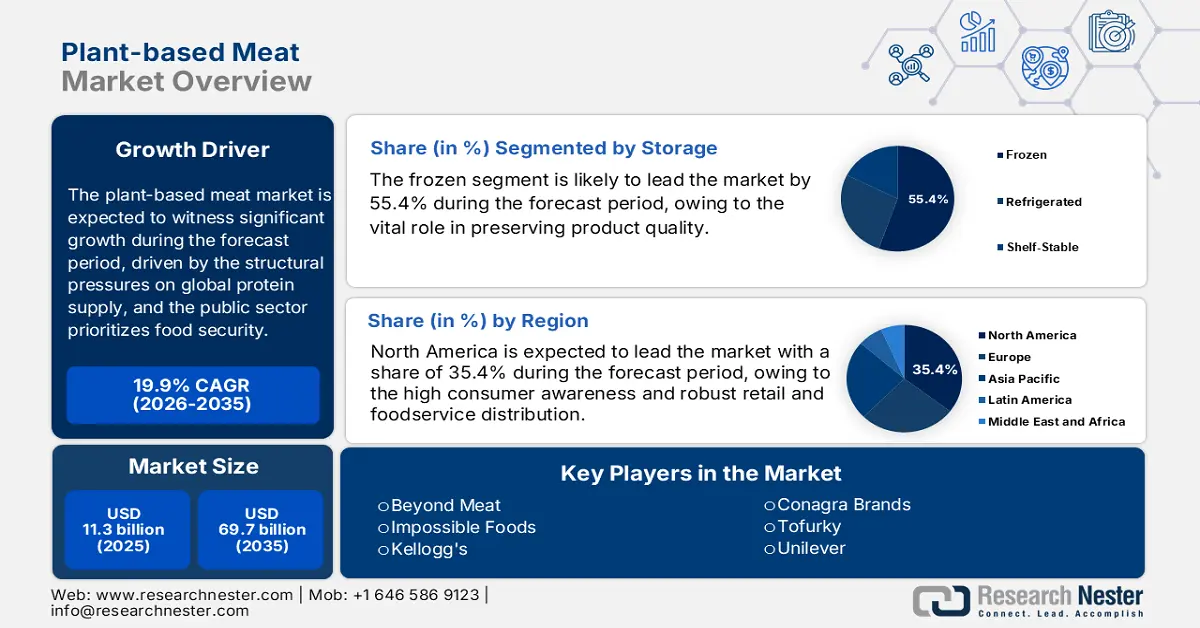
Plant-based Meat Market Outlook:
Plant-based Meat Market size was valued at USD 11.3 billion in 2025 and is projected to reach USD 69.7 billion by the end of 2035, rising at a CAGR of 19.9% during the forecast period, i.e., 2026-2035. In 2026, the industry size of plant-based meat is estimated at USD 13.6 billion.
The demand for plant-based meat market products is increasingly shaped by structural pressures on global protein supply, and the public sector prioritizes food security and resource efficiency. The Food and Agriculture Organization reports that global meat consumption is growing at a rate of 5% to 6% per year, with further growth concentrated in urbanizing middle-income economies. At the same time, the Breakthrough Institute data in March 2023 estimates that livestock accounts for roughly 14.5% of global anthropogenic greenhouse gas emissions, promoting the government to encourage diversification of protein sources within national food strategies. Further, it is expected that the total domestic protein demand will continue to rise while the federal nutrition assistance programs served a million people, reinforcing institutional interest in scalable, shelf-stable non-animal protein options that reduce the exposure to supply shocks and price volatility.
Public health and regulatory signals further reinforce the market trajectory. The WHO links high intake of processed and red meat to increased risk of non-communicable diseases. In the response, several national dietary guidelines now emphasize plant-forward eating patterns. For example, the U.S. Dietary Guidelines for Americans highlight legumes, pulses, and soy-based foods as preferred protein as part of long-term resilience planning. The FAO March 2023 estimates that the global food demand will increase by nearly 60% by 2050, driven by population growth and income gains, placing pressure on governments and institutional buyers to secure the protein supplies with lower water and land intensity. Against this backdrop, plant-based meat has moved from a niche retail category toward a strategic component of foodservice public procurement and emergency nutrition planning, mainly where policy objectives align around emissions reduction, health outcomes, and supply chain stability.