Peripheral Neuritis Treatment Market Outlook:
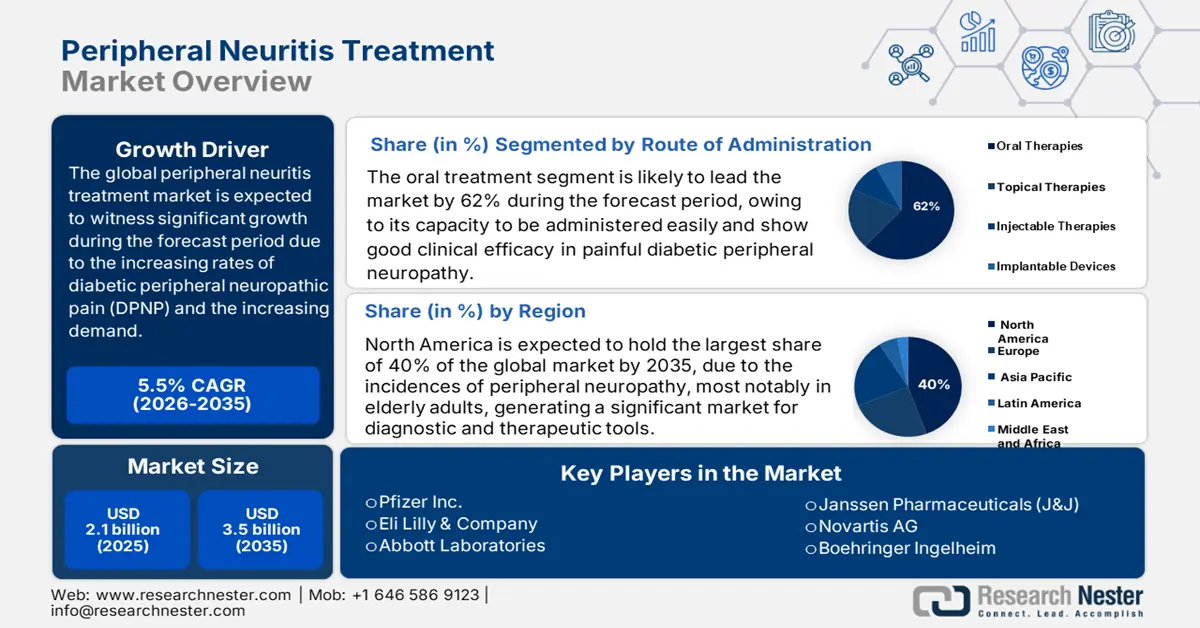
Peripheral Neuritis Treatment Market size is valued at USD 2.1 billion in 2025 and is projected to reach approximately USD 3.5 billion by the end of 2035, growing at a CAGR of around 5.5% during the forecast period, i.e., 2026–2035. In 2026, the industry size of the peripheral neuritis treatment is estimated at USD 2.2 billion.
The increasing rates of diabetic peripheral neuropathic pain (DPNP) constitute a key growth driving factor for the global market. According to a study by NIH in June 2025, 40 to 60% of patients have diabetic neuropathy worldwide. It is anticipated that the figures are expected to reach around 552 million by 2030, and the potential patient population has drastically expanded. As per that report, the use of healthcare resources and costs spikes after being diagnosed, primarily arising from hospitalizations and medications that are a burden in China, where the annual costs incurred by DPNP patients. Treatments comprise gabapentinoids, antidepressants, and physical therapies such as acupuncture, indicative of almost similar needs for pharmacologic and non-pharmacologic interventions across the world.
Peripheral neuritis treatment market is often treated with regular medicine, but it's also common to use extra, non-drug therapies to help manage symptoms and improve recovery. As per a report by January 2023 MDPI, pharmacological treatments currently available in clinics, such as Duloxetine, offer only moderate symptom relief, so practitioners have turned to integrative therapies comprising manipulative approaches, acupuncture, cryotherapy, and tactile stimulation. With strengthening support from a systematic review plus expert consensus, these treatments are deemed mostly safe, feasible, and implementable within the clinical environment in a patient-centric way.