Osteoarthritis Therapeutics Market Outlook:
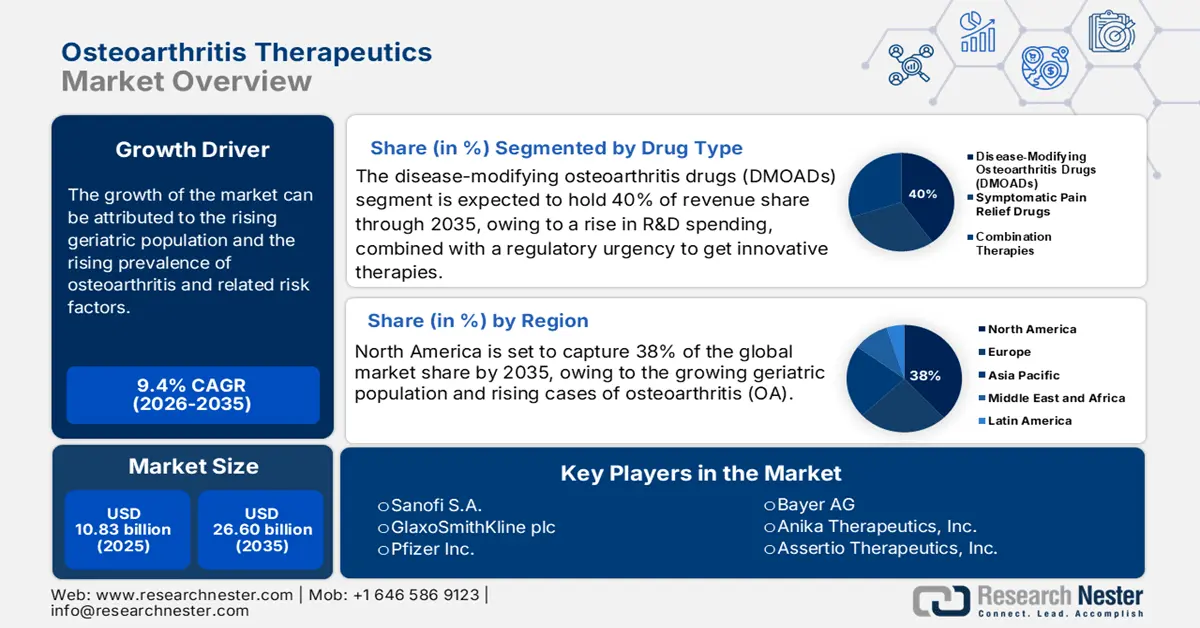
Osteoarthritis Therapeutics Market size was valued at USD 10.83 billion in 2025 and is projected to reach USD 26.60 billion by the end of 2035, rising at a CAGR of 9.4% during the forecast period, i.e., 2026-2035. In 2026, the industry size of osteoarthritis therapeutics is assessed at USD 11.85 billion.
The global market is experiencing change in a variety of ways, and, in particular, the sector is focused on revolutionary advances in therapies and technologies. Of particular note are disease-modifying osteoarthritis drugs (DMOADs), which aim to alter the progression of the disease rather than just treating its symptoms. DMOADs represent treatments that can repair cartilage and prevent joint damage, which certainly fills a critical but unmet medical need. At the same time, the advent of digital health technologies is delivered by allowing for continuous monitoring and tracking, personalized treatment plans, and improving patient adherence and engagement. In addition, strategies in personalized medicine are being fast-tracked as a result of advancements in stem cell research focusing on cartilage regeneration.
Regenerative treatments (i.e., injectable platelet-rich plasma (PRP) or stem cells) are finding wider acceptance as they are believed to restore joint function while alleviating pain and restoring joint flexibility with a lower risk of clinically significant adverse effects compared to traditional treatments. Similarly, requests for minimally invasive procedures like genicular artery embolization (GAE) are being directed more frequently toward hospitals and interventional radiologists as patients want to learn more about options that could provide effective pain relief without necessitating surgery. Overall, as pharmaceutical companies and emerging biotechnology companies continue to drive rapid innovation, partnerships will increasingly straddle a divide that combines lessons learned from years of applied biomedical research in mitigating osteoarthritis pain.