Orthopedic Software Market Outlook:
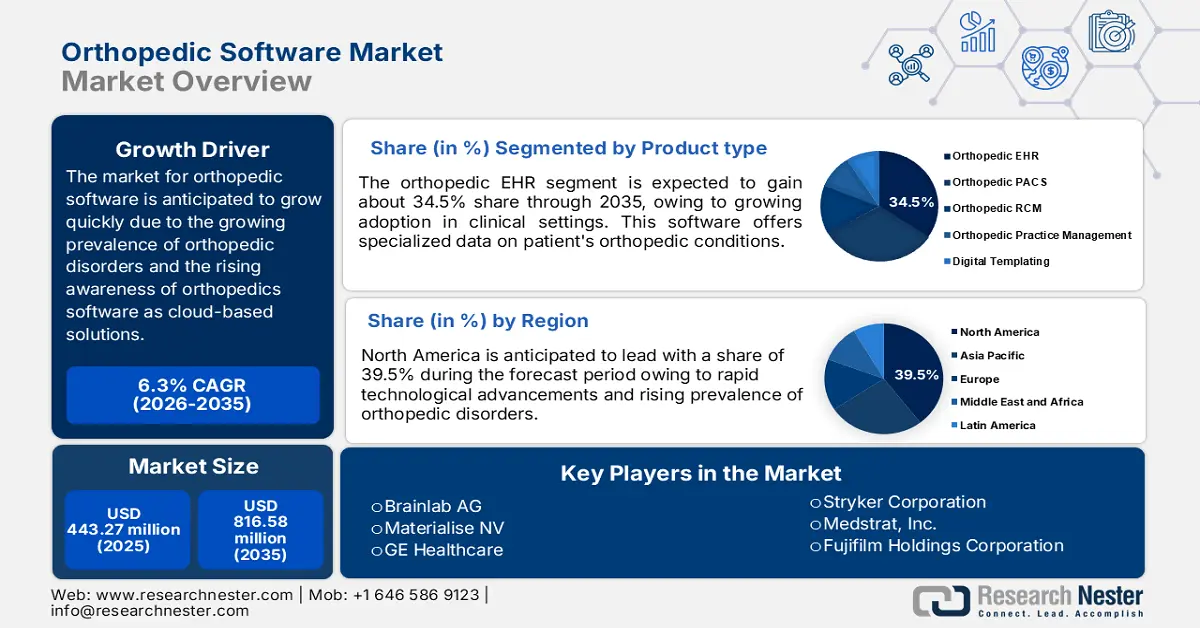
Orthopedic Software Market size was valued at USD 443.27 million in 2025 and is expected to reach USD 816.58 million by 2035, registering around 6.3% CAGR during the forecast period i.e., between 2026-2035. In the year 2026, the industry size of orthopedic software is assessed at USD 468.4 million.
The orthopedic software market is expected to grow rapidly during the forecast period owing to the rising prevalence of orthopedic diseases such as arthritis, osteoporosis, bursitis, and other musculoskeletal disorders among the elderly population across the globe. According to the Centers for Disease Control and Prevention (CDC) report, about 18.3 million people in the U.S. visit emergency departments annually owing to orthopedic injuries. This highlights the crucial need for effective management solutions. Moreover, government support and initiatives from orthopedic organizations additionally promote the adoption of innovative technologies, thereby accelerating the advancement and implementation of specialized orthopedic software solutions to meet the rising healthcare demands.
Another factor boosting orthopedic software market growth is the rising demand for minimally invasive surgeries (MIS). This is mainly influenced by low complication rates and reduced postoperative pains associated with these procedures. As more patients and healthcare providers seek options that encourage faster recovery and better outcomes orthopedic software solutions are developing to support these advanced surgical techniques. For instance, in March 2023, Stryker launched the Mako Total Knee 2.0 which improves robotic-assisted surgeries and aligns with the increasing trend of MIS.