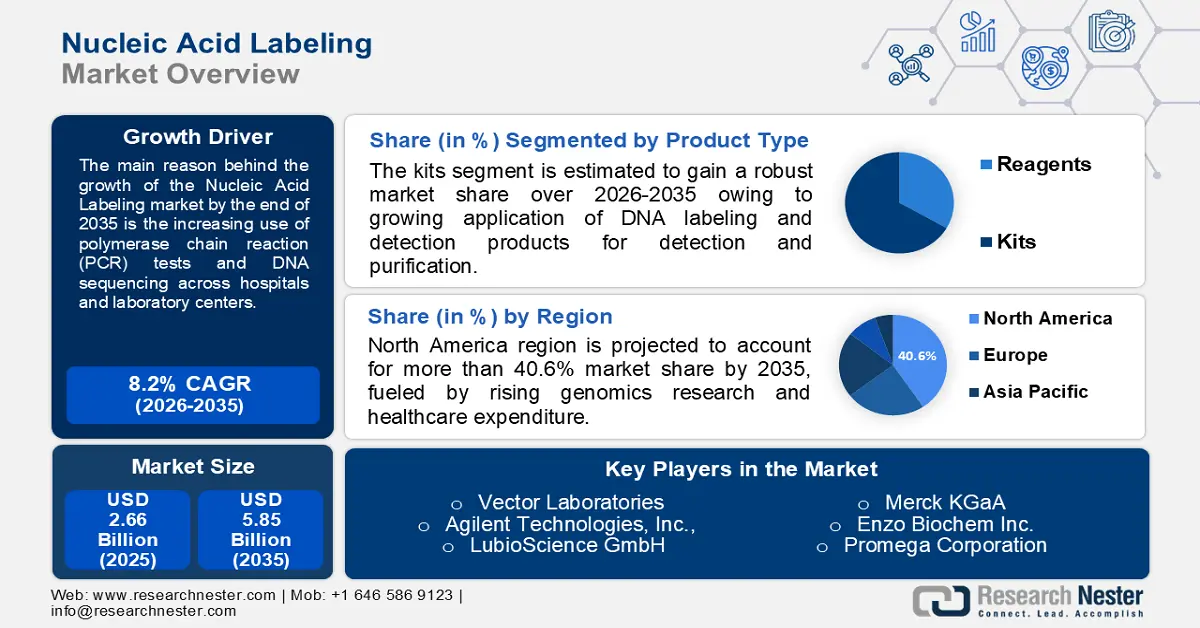
Nucleic Acid Labeling Market Outlook:
Nucleic Acid Labeling Market size was valued at USD 2.66 Billion in 2025 and is likely to cross USD 5.85 Billion by 2035, registering more than 8.2% CAGR during the forecast period i.e., between 2026-2035. In the year 2026, the industry size of nucleic acid labeling is assessed at USD 2.86 Billion.
The growth of the market can be attributed to the increasing use of polymerase chain reaction (PCR) tests and DNA sequencing across hospitals and laboratory centers owing to the outbreak of various infectious diseases such as the COVID-19 pandemic. For instance, in February 2021, more than 1 million PCR tests were performed in the United States as a consequence of the COVID-19 pandemic. The PCR test is used to determine the genetics of an organism to find out whether it is a virus, bacteria, or any other organism. It is used to find the type of disease or infection a patient is suffering from, so that appropriate treatment is indicated to the patient. The prevalence of infectious diseases across the world that are both contagious and asymptomatic is estimated to drive market growth.
Moreover, the development of healthcare facilities, increasing awareness of early disease diagnosis, along with increasing per capita income are anticipated to propel the demand for nucleic acid labeling during the forecast period. The World Bank reported a 4.8% increase in worldwide income per capita in 2021, compared with 1.5% in 2019. People are becoming more aware of their health with the adoption of early diagnosis tests. The spread of COVID-19 made people more conscious of getting tested if they saw any symptoms that were not common. The government is also paying much attention to the healthcare sector, as it is crucial for a healthy community. Also, the spread of genetic disorders is something that cannot be changed after their incidence. Therefore, it is better to prevent the cause through genetic material testing. Thus, the growth of the market is expected to grow during the forecast period.