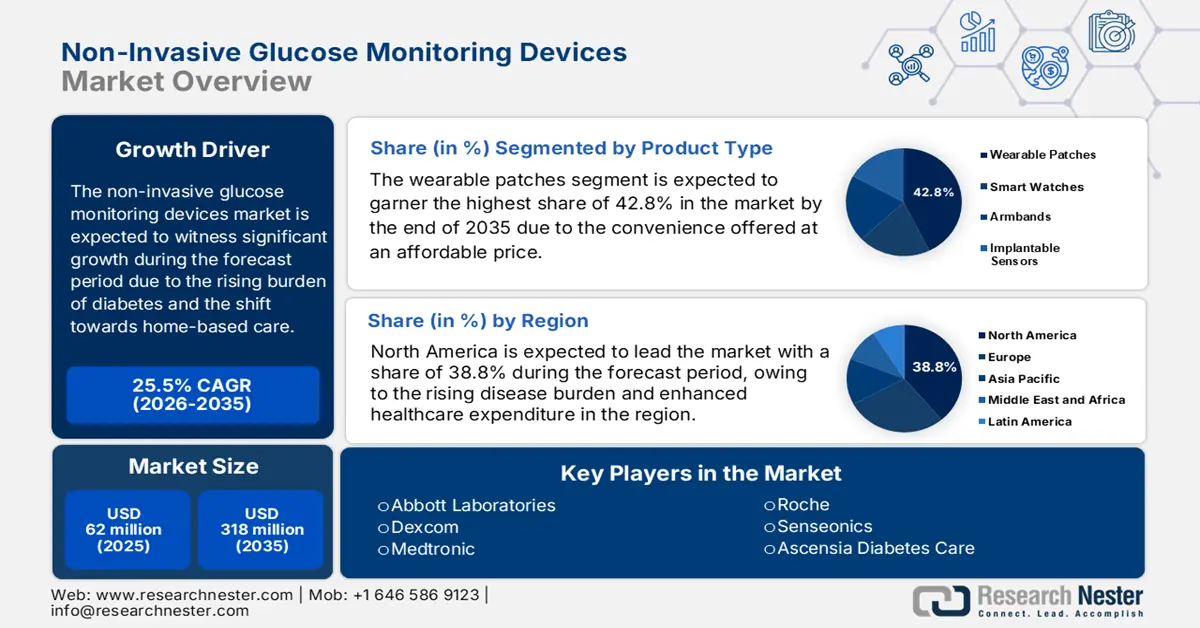
Non-Invasive Glucose Monitoring Devices Market Outlook:
Non-Invasive Glucose Monitoring Devices Market size was valued at USD 62 million in 2025 and is projected to reach USD 318 million by the end of 2035, rising at a CAGR of 25.5% during the forecast period, i.e., 2026-2035. In 2026, the industry size of non-invasive glucose monitoring devices is evaluated at USD 96 million.
The responsibility for market growth is critically held by the worldwide diabetic population that requires continuous glucose monitoring. The National Institutes of Health predicts that an estimated 643 million persons between the ages of 20 and 79 will have diabetes by 2030, and 783 million will by 2045. Emerging trends in the global non-invasive glucose monitoring devices market point to the direction of personalized solutions. One very exciting trend is the emergence of wearable, patch-based glucose monitor devices that use optical, electrochemical, and spectroscopic sensors to provide the user with real-time continuous glucose tracking without pain and seamlessly integrate into their smartphone or health apps. The emergence of artificial intelligence being incorporated into these solutions to provide accuracy of data, better trending of glucose levels, and insights that are personalized for the user will allow these devices to monitor their glucose levels and provide forecasts.
Moreover, regulatory support has increased for novel over-the-counter (OTC) devices. The increasing acceptability of home care, or telehealth, is also fuelling the demand for non-invasive glucose monitoring and remote glucose monitoring platforms. This enables those with diabetes to share glucose data directly with healthcare providers to enhance management and to improve real-time intervention. These relationships and regulatory support collectively signal the rise of a more digital, connected, user-centered approach to diabetes management.