Next Generation Computing Market Outlook:
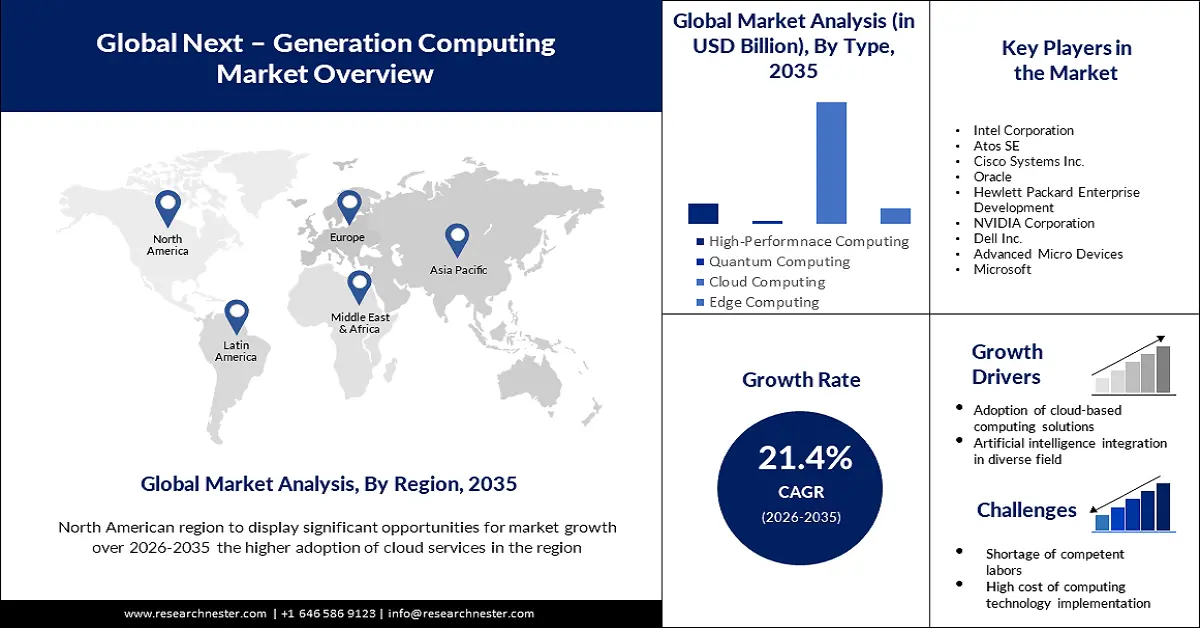
Next Generation Computing Market size was valued at USD 222.53 billion in 2025 and is set to exceed USD 1.55 trillion by 2035, registering over 21.4% CAGR during the forecast period i.e., between 2026-2035. In the year 2026, the industry size of next generation computing is estimated at USD 265.39 billion.
The Internet of Things, the newest technological advancement, produces vast volumes of data from connected gadgets like virtual entertainment, GPS beacons, and home automation systems. Next generation computing is becoming more and more popular as a means of managing and storing the massive volumes of data produced by these channels. It creates copious amounts of sensitive data and piques interest in next generation computing. It includes anticipating hardware breakdowns, measuring temperatures, and enabling autonomous driving. By 2023, there will be about 15.14 billion IoT devices. For example, the Exascale Computing Project (ECP) of the U.S. Department of Energy (DOE) has brought together a multidisciplinary team of computing experts over the past seven years to enhance next generation computer architectures and transform scientific modeling.
In addition to these, using information gathered about how systems work, artificial intelligence AI and machine learning ML can be utilized to assist and create autonomous behavior. To optimize resource management, for example, machine learning techniques can be used to identify patterns in workloads. Furthermore, ML-based dynamic system identification methods—such as recurrent neural networks, which an autonomous manager can adaptively activate to accomplish self-learning—are employed to lower model uncertainty. AI-based autonomic computing's low total cost of ownership is its primary benefit. It drastically cuts down on maintenance work. AI-supported automated IT systems improve system stability, reduce implementation and maintenance costs and time, and contribute to rising demand during the predicted period.