Natural Surfactants Market Outlook:
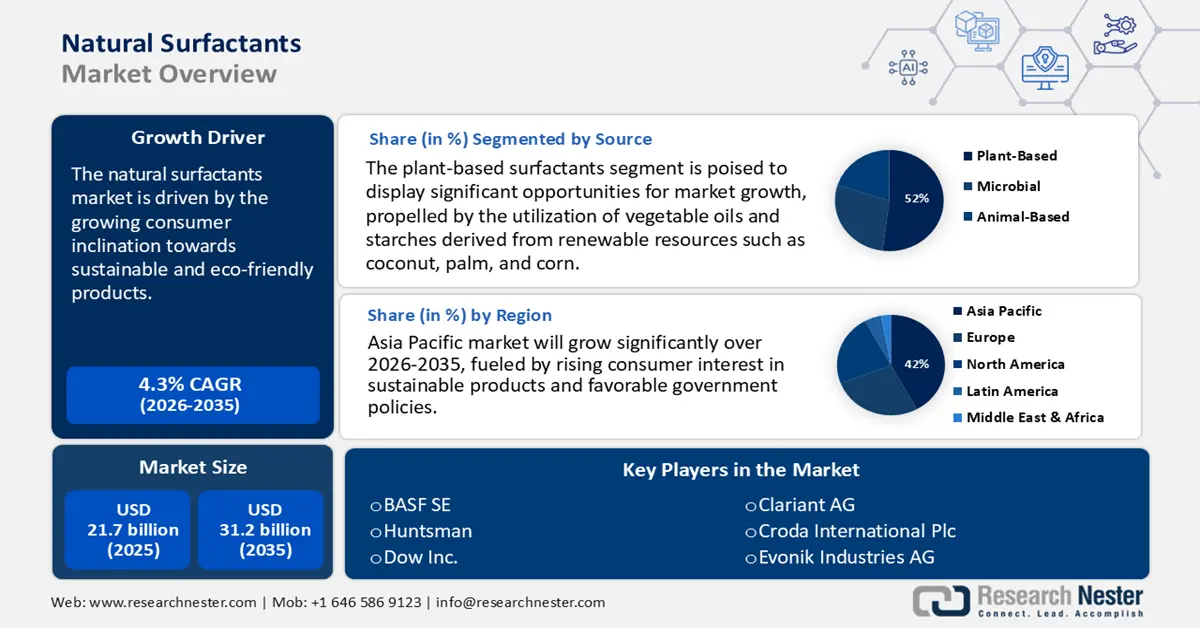
Natural Surfactants Market size was valued at USD 21.7 billion in 2025 and is projected to reach USD 31.2 billion by the end of 2035, rising at a CAGR of 4.3% during the forecast period, i.e., 2026-2035. In 2026, the industry size of natural surfactants is assessed at USD 22.5 billion.
The market for natural surfactants is primarily driven by the growing consumer inclination towards sustainable and eco-friendly products. Most consumers are prepared to spend more on sustainable brands, which motivates manufacturers to utilize biodegradable and low-toxicity surfactants derived from renewable resources such as plant oils and sugars. Furthermore, stringent government regulations, including the EU’s REACH guidelines, compel companies to seek safer chemical alternatives, thereby enhancing the global adoption of natural surfactants.
The supply chain for natural surfactants is significantly dependent on raw materials such as coconut, palm, and vegetable oils. The processes involved in their extraction and processing are intricate and expensive, necessitating specialized equipment. When applied at a concentration of 0.2 weight percent, saponins derived from plants have been shown to decrease the interfacial tension between the water and oil phases by up to 93.2% at high temperatures and up to 76% at normal temperatures. Other natural surfactants, such as sophorolipids and rhamnolipids, have also demonstrated encouraging outcomes in lowering the percentage of interfacial tension. Moreover, the restricted availability of raw materials and the competition posed by the food and biofuel industries contribute to supply uncertainties, complicating consistent production and limiting broader acceptance in sectors driven by cost considerations.