Nanosensors Market Outlook:
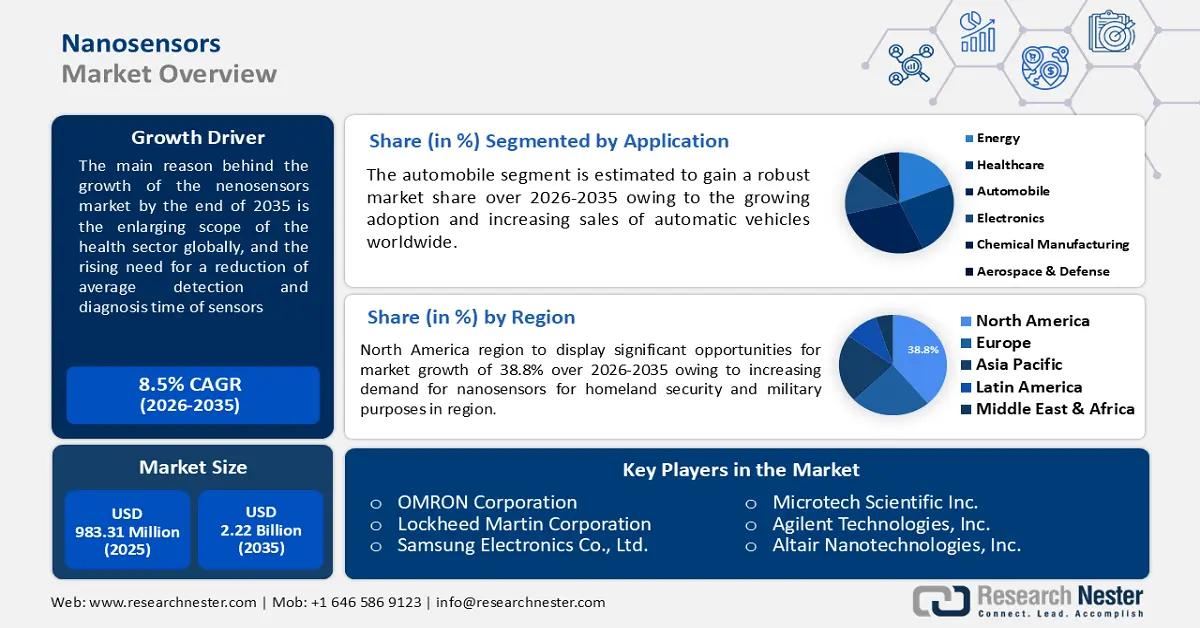
Nanosensors Market size was over USD 983.31 million in 2025 and is anticipated to cross USD 2.22 billion by 2035, witnessing more than 8.5% CAGR during the forecast period i.e., between 2026-2035. In the year 2026, the industry size of nanosensors is estimated at USD 1.06 billion.
The growth of the market is primarily attributed to the enlarging scope of the health sector globally, and the rising need for a reduction of average detection and diagnosis time of sensors is also expected to serve as a growth driver for the market shortly. According to the World Bank, the total health expenditure amounted to 9.83% of the world’s total GDP share in 2019. The percentage rose from 9.7% of the global GDP in 2018. Moreover, an escalating trend of usage of miniaturized products across the world is evaluated to offer abundant opportunities for market expansion in the forecast period.
Nanosensors are small chemical, and biological sensors capable of detecting and detecting nanoparticles. Given its ability to communicate information about nanoparticles, the nanosensor industry is gaining more and more attention. Nano-sensors typically measure between a nanometer and 100 nanometers. Furthermore, the rising utilization of nanosensors in various sectors such as forensics, cancer detection, military and security, aerospace, and others, increasing demand for premium quality products, affordability of nanosensors, technological advancements coupled with development and launch of innovative products by key manufacturers are anticipated to drive global nanosensors market growth over the forecast period. For Instance, in September 2021, Honeywell International Inc. announced the latest technologically advanced robots designed to aid warehouses and distribution centers automate the manual pallet offloading process, reducing operational risks of potential injuries and labor shortages.