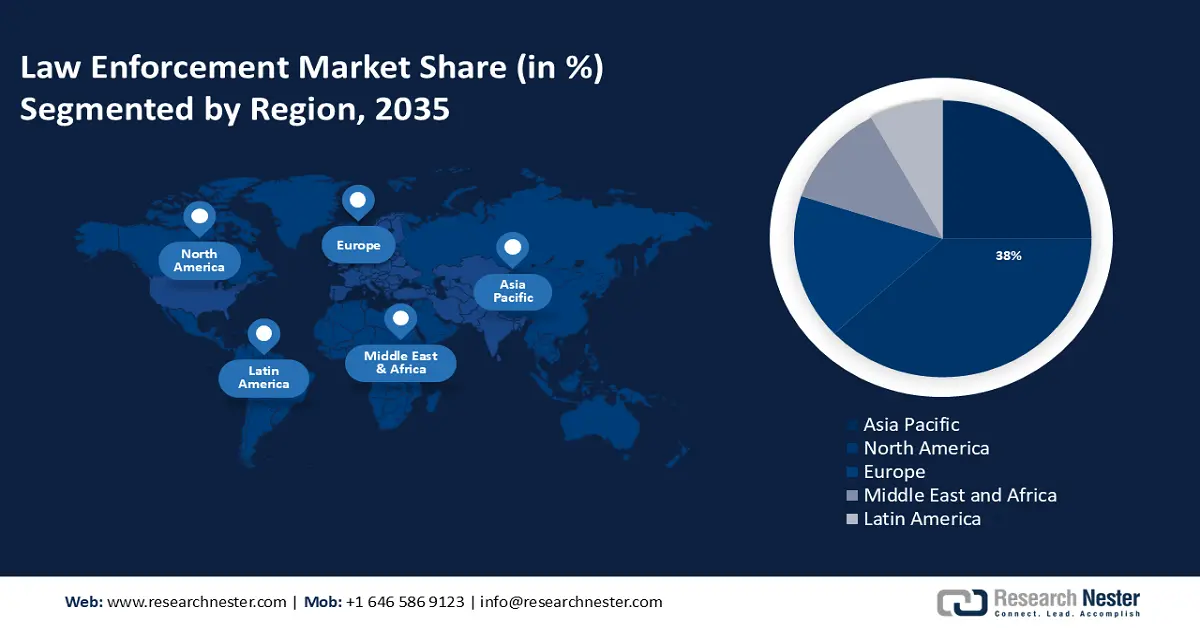
Law Enforcement Software Market Regional Analysis:
North American Market Insights
The law enforcement software market in North America, is anticipated to hold the largest share of about 38% by the end of 2035. The market growth in the region is expected on account of the sufficient level of usage of enforcement software within the local organizations, the systematic formalization of legislative workspaces, and further encouraging the adequate provision of IT technology. Furthermore, the strategic expansions in community policy initiatives, are underscored by the Department of Justice’s allocation of approximately USD 139 million in funding towards digital policing to adapt policing models to other factors contributing to regional growth. Training initiatives for law enforcement personnel on implicit bias, racial profiling, intervention duties, and procedural justice, supported by approximately USD 42 million in anti-bias program funding, are anticipated to boost law enforcement market expansion. Furthermore, the regional sectoral growth is bolstered by the presence of major industries.
APAC Market Insights
The Asia Pacific law enforcement software market is estimated to the second largest, registering a share of about 25% by the end of 2035. This anticipated growth is partly a response to the challenges faced in 2021 when Asian organizations suffered the most cyber-attacks worldwide, accounting for around 26% of the attacks against organizations by continent. The demand for advanced technological products for law enforcement, essential in the prevention of such criminal activities, is consequently on the rise. This surge in growth is propelled by technological innovations, the establishment of standardized automated processes for general examinations, and a significantly heightened awareness within government agencies about the benefits of enforcement software. The robust growth trajectory of the Asian Pacific sector is underpinned by the region’s commitment to adopting cutting-edge solutions and enhancing law enforcement capabilities through strategic technology investments, directly addressing the security vulnerabilities exposed in the previous year.