Intrapartum Monitoring Devices Market Outlook:
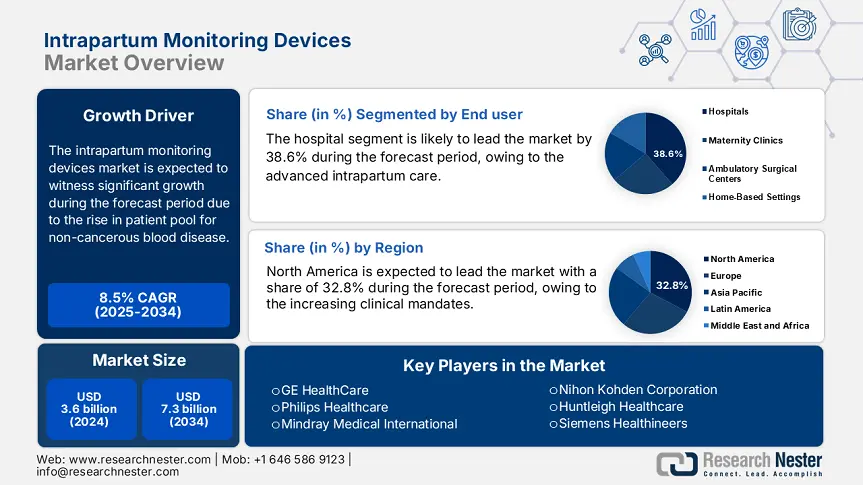
Intrapartum Monitoring Devices Market size was estimated at over USD 3.6 billion in 2024 and is projected to reach USD 7.3 billion by the end of 2034, exhibiting a CAGR of 8.5% during the forecast period 2025-2034. In 2025, the industry size of the intrapartum monitoring devices is evaluated at USD 3.7 billion.
The global market is expanding steadily with the rising number of childbirths in the emerging nations and high-risk pregnancies globally. As per the WHO report, nearly 140.4 million births occur yearly, with 15.6% of births under high risk, necessitating consistent maternal-fetal monitoring. Further, the data from the CDC also states that 3.9 million births in 2023 required intrapartum monitoring systems in the maternity hospitals. Nigeria and India together account for one-third of the maternal deaths globally, and are increasing the procurement of uterine and fetal monitors via public health initiatives like India's RMNCH+A program. A bulk source of equipment for public procurement frameworks is used, and the primary care hospitals are also expanded with improved access.
From the supply chain point, the distribution and manufacturing of intrapartum monitoring devices are centralized in many regions. Most of the medical devices, including bulk microelectronic components, high-grade medical sensors, and telemetry systems, are imported from Germany, Japan, and the U.S., where manufacturing of these raw materials remains strong in these regions. The medical equipment exports in the U.S. rose by 8.7% in 2023. On the input side, the producer price index increased to 5.9% in 2024 for medical instrument manufacturing, and the consumer price index rose to 3.6% for hospital and related services, impacting high service delivery costs in maternal care. The research, development, and deployment investments are the key drivers in redefining the intrapartum monitoring segment.