Heparin Market Outlook:
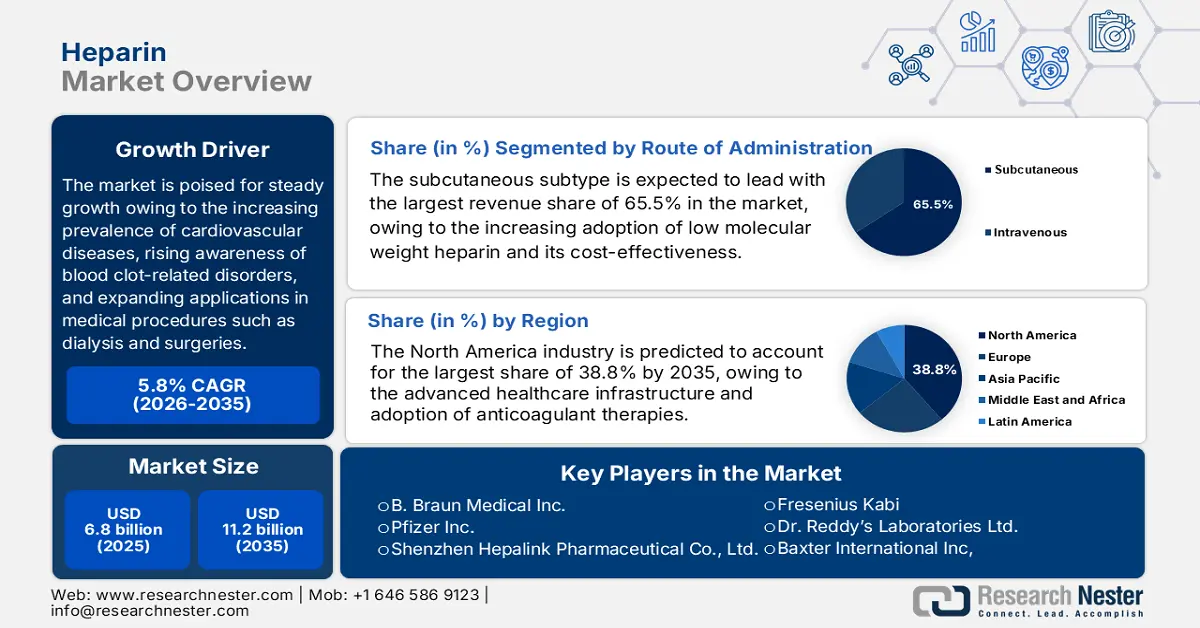
Heparin Market size was valued at USD 6.8 billion in 2025 and is projected to reach USD 11.2 billion by the end of 2035, rising at a CAGR of 5.8% during the forecast period, i.e., 2026-2035. In 2026, the industry size of heparin is estimated at USD 7.1 billion.
The heparin market is poised for steady growth owing to the increasing prevalence of cardiovascular diseases, rising awareness of blood clot-related disorders, and expanding applications in medical procedures such as dialysis and surgeries. According to official statistics from the CDC in January 2025, venous thromboembolism, including deep vein thrombosis and pulmonary embolism, affects up to 900,000 people every year in the U.S. and causes an estimated 60,000 to 100,000 deaths each year. It also underscored that a significant portion of VTE cases is healthcare-associated, occurring during or after hospitalization, surgery, or cancer treatment, and many are preventable with anticoagulant therapy or compression devices. Hence, these drives sustained hospital and clinical demand for heparin as a frontline anticoagulant for treatment and prophylaxis across surgeries, cancer care, and inpatient settings.
Furthermore, the heightened demand for anticoagulants, coupled with advancements in biopharmaceutical manufacturing, is readily enhancing the accessibility and efficiency of heparin. In this context, as per the recent findings from CMS, the continuously changing payment amounts for the HCPCS J0911 taurolidine and heparin catheter lock highlight the dynamic nature of reimbursement in the dialysis sector. These changes encourage healthcare providers, suppliers, and industry players to be proactive in managing procurement and pricing strategies. Also, by anticipating periods of higher or lower payment, stakeholders can optimize their inventory, negotiate better supply contracts, and look for value-added services. In addition, this environment of fluctuating payments also drives innovation, allowing providers to improve efficiency and patient care while capitalizing on periods of favorable reimbursement. Overall, understanding and responding to these price shifts can create opportunities for growth, cost management, and strategic positioning in the heparin market.
HCPCS J0911 Taurolidine & Heparin Catheter Lock: Effective Period, for 1.35 MG Dosage, and Payment Analysis (USD)
|
Effective Period |
Payment Amount |
|
January 1, 2026, through March 31, 2026 |
USD 5.635 |
|
October 1, 2025 -December 31, 2025 |
USD 6.046 |
|
Not specified |
USD 7.248 |
|
April 1, 2025 -June 30, 2025 |
USD 8.106 |
|
July 1, 2024 -September 30, 2024 |
USD 8.33 |
Source: CMS