Gin Market Outlook:
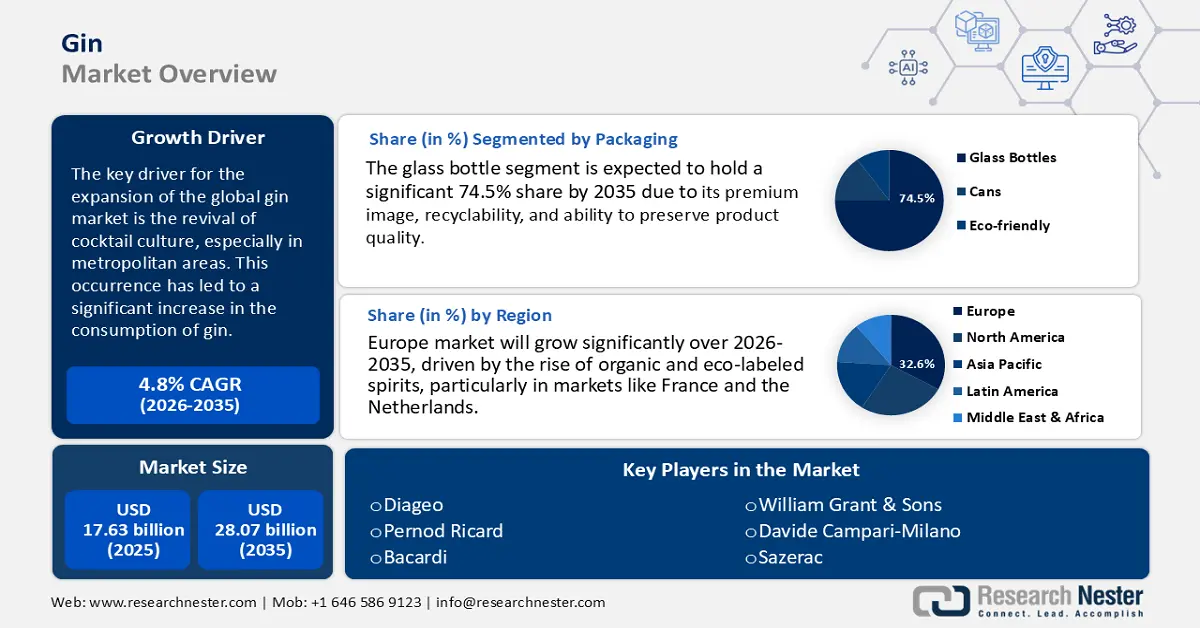
Gin Market size was valued at USD 17.63 billion in 2025 and is estimated to reach USD 28.07 billion by the end of 2035, registering a CAGR of 4.8% during the forecast period, i.e., 2026-2035. In 2026, the industry size of gin is evaluated at USD 18.46 billion.
The key driver for the expansion of the global market is the revival of cocktail culture, especially in metropolitan areas. This occurrence has led to a significant increase in the consumption of gin. For example, in Hong Kong, the value of retained imports of spirits, including gin, increased by 30% in 2023 compared to the previous year, totaling $779 million, following the easing of pandemic-related restrictions. This increase reflects a strong demand for gin, driven by evolving consumer tastes and heightened social engagements.
The production of gin is heavily reliant on agricultural resources, including juniper berries and a variety of botanicals, within the supply chain. According to the U.S. Department of Agriculture, the United States stands as a prominent exporter of raw agricultural goods, which are vital for gin manufacturing. In April 2020, the Producer Price Index of Distilleries, which includes bottled gin, vodka, rum, cordials, and cocktails, was 104, according to the U.S. Bureau of Labor Statistics. On the consumer front, the Bureau of Labor Statistics monitors the Consumer Price Index (CPI) for distilled spirits, including gin, offering valuable insights into retail price movements. The U.S. government's dedication to R&D, as highlighted in budget documents, emphasizes the significance of innovation in sustaining competitiveness within the spirits market.