Genetic Testing Market Outlook:
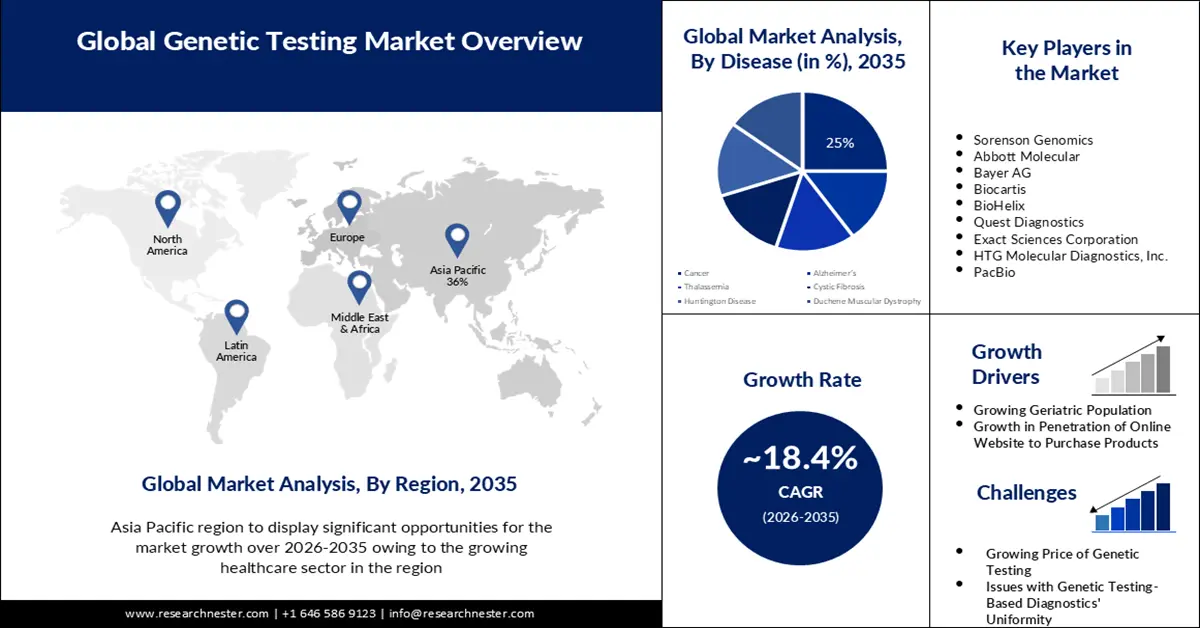
Genetic Testing Market size was valued at USD 17.21 billion in 2025 and is set to exceed USD 93.17 billion by 2035, expanding at over 18.4% CAGR during the forecast period i.e., between 2026-2035. In the year 2026, the industry size of genetic testing is estimated at USD 20.06 billion.
The major growth factor in the market is impelled by the rising prevalence of hereditary illnesses. 72-80% of rare diseases across the globe are caused by genetic mutations (2021 Frontiers article). An NLM study from February 2025 revealed that 93.4% of the 2799 subjects from the Undiagnosed Diseases Network (UDN) were detected to have genetic disease. In addition, congenital birth defects took 240,000 newborns’ lives within 28 days of delivery and it affected approximately 6.0% of these adolescents worldwide, according to a 2023 WHO report. This highlights the importance of prenatal tests to help parents make crucial decisions about the early diagnosis, treatment, and prevention for infants at higher risk, propelling adoption in this field.
The growing popularity of reproductive health and genomic sequencing for understanding disease characteristics is influencing more residents to invest in this category. On this note, NLM published results from an in-person survey in April 2022. It concluded a willingness to pay USD 25.0, USD 25.0-500.0, and over USD 500.0 for these tests among 64.0%, 29.3%, and less than 10.0% of 677 participants, respectively. This signifies that the broad penetration of the market requires a standardized payers’ pricing to attract maximum consumers. Furthermore, the integration of advanced technologies such as AI and machine learning is revolutionizing the capabilities of this kind of diagnosis with better accuracy and improved accessibility.