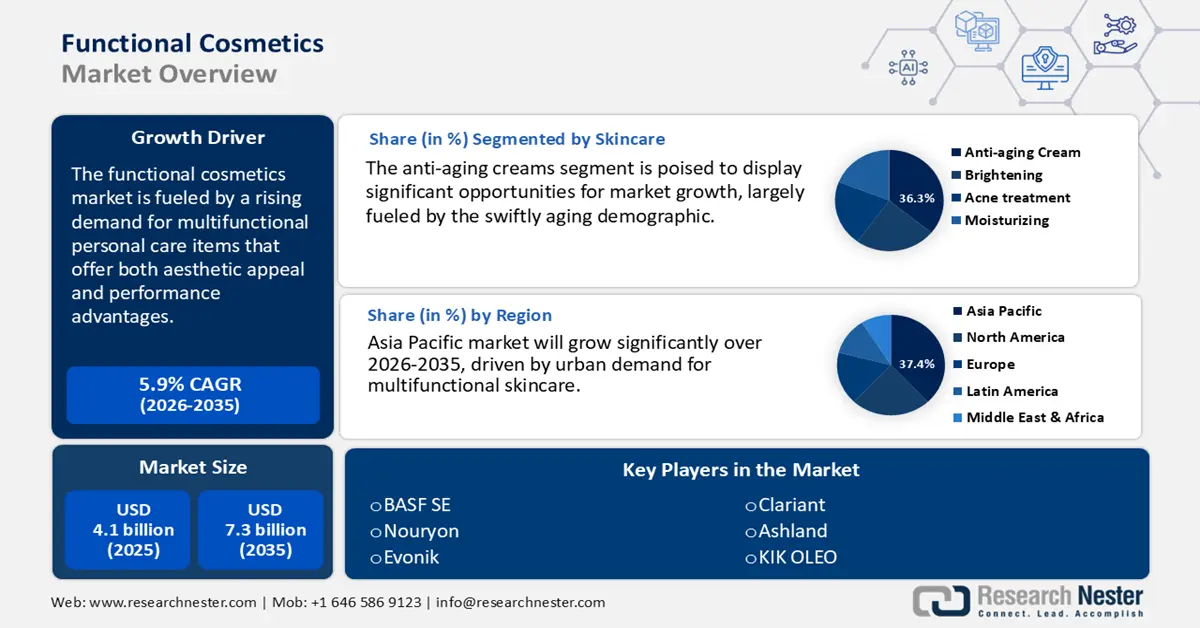
Functional Cosmetics Market Outlook:
Functional Cosmetics Market size was valued at USD 4.1 billion in 2025 and is projected to reach USD 7.3 billion by the end of 2035, rising at a CAGR of 5.9% during the forecast period, i.e., 2026-2035. In 2026, the industry size of functional cosmetics is assessed at USD 4.3 billion.
The functional cosmetics sector is witnessing significant growth, propelled by consumer interest in products that combine aesthetic advantages with measurable performance results, such as anti-aging, UV protection, and enhancement of the skin barrier. This shift in personal care corresponds with wider health-conscious trends, where consumers are looking for multifunctional solutions that promote wellness while providing visible outcomes. Progress in formulation science, especially the incorporation of bioactive components and nanotechnology, is allowing cosmetic brands to fulfill these changing expectations with innovative, high-performance offerings.
Public health initiatives, sustainability objectives, and targeted government funding are further driving this change. Organizations like the National Institutes of Health (NIH) and the Department of Energy (DOE) are backing research into bio-based substitutes for traditionally synthetic cosmetic ingredients, promoting safer and more environmentally friendly formulations. A notable instance is Estée Lauder Companies, which has made substantial investments in green chemistry and biotechnology collaborations to create sustainable, high-efficacy ingredients. By partnering with biotech companies and research institutions, the firm is integrating plant-derived actives and eco-conscious production techniques into its product ranges, establishing itself as a frontrunner in the functional and sustainable cosmetics industry.