Foot Orthotic Insoles Market Regional Analysis:
North American Market Insights
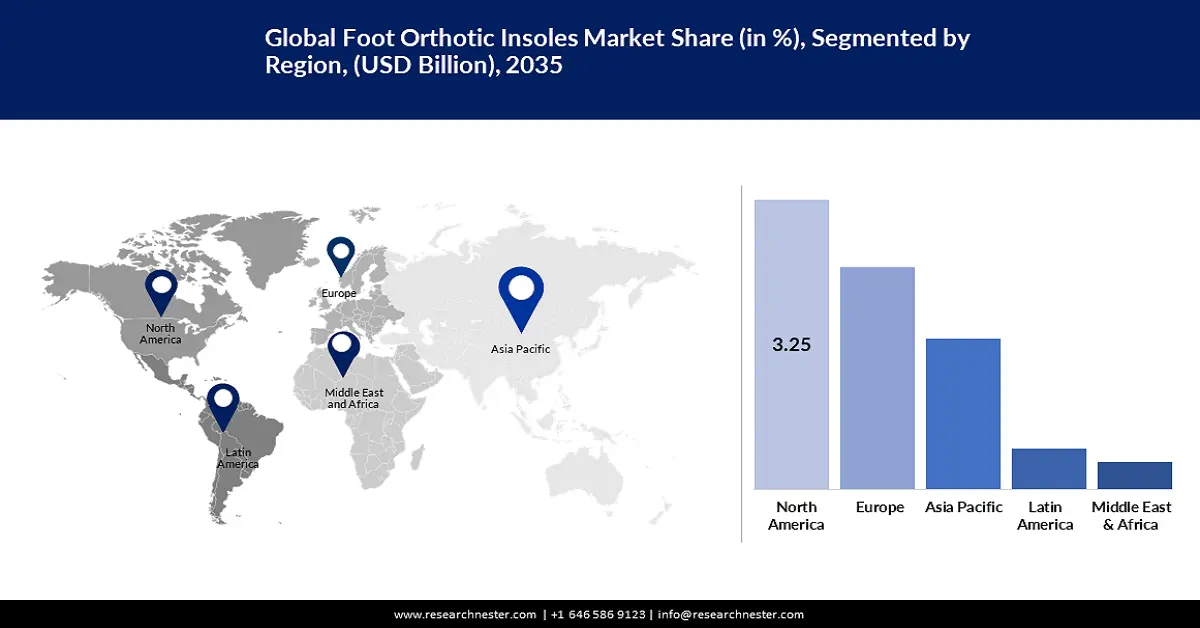
North America is expected to lead the global foot orthotic insoles market with a 39% share by 2035, propelled by increasing investments from both public and private players, high prevalence of foot-related disorders, and the presence of well-established healthcare services and infrastructure. Innovations in material, manufacturing processes, and customization options and the rapid expansion of e-commerce platforms have resulted in growing popularity of foot orthotic insoles in this region.
In the U.S., sedentary lifestyles and obesity have resulted in increasing conditions, and according to reports, 0.8% population experience plantar fasciitis and heel spurs. This has resulted in a growing need for comfortable and effective foot orthotic insoles. Moreover, as the U.S. is at the forefront of integrating advanced technologies, several key players are developing orthotic insoles using 3D printing and CAD/CAM technologies to cater to rising consumer demand. These products are also popular among fitness and sports enthusiasts to prevent injuries and enhance their performance.
Canada has a rapidly aging demographic, with older adults seeking orthotic foot insoles for managing mobility issues and conditions like arthritis and diabetes. Moreover, increasing awareness about preventive foot care, and rising investments by key players to expand their product base in the country are set to impel the market revenue in Canada.
Europe Market Insights
Europe region is anticipated to observe substantial growth through 2035. According to WHO, the cases of osteoarthritis have increased by 54% in the last 30 years. Currently in Western Europe, there are nearly 57 million people are suffering from arthritis. This is also expected to fuel the demand for foot orthotic insoles in the coming years. In March 2021, Norfolk Biomechanics Clinic announced the launch of in-house 3D printing manufacturing technology for medical orthotic insoles.
The market in Germany is expected to hold a robust share between 2026 and 2035, attributed to rising aging population and increasing investments in innovative products and manufacturing processes like composite carbon fiber to produce more effective and durable orthotic insoles.