Food Service Disposable Market Outlook:
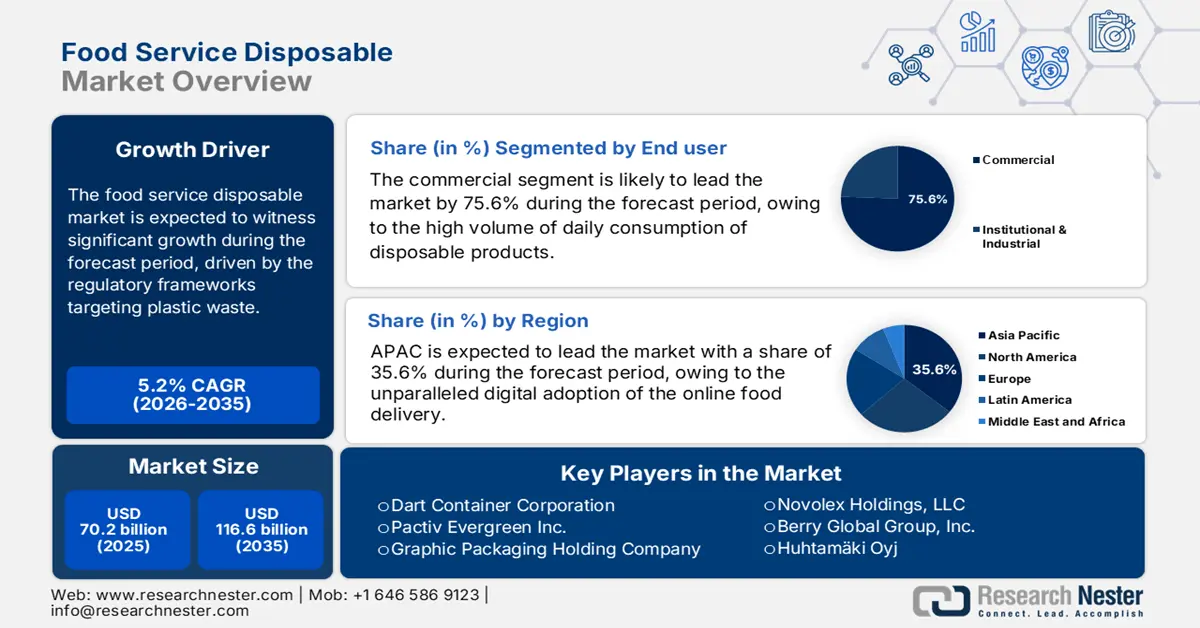
Food Service Disposable Market size was valued at USD 70.2 billion in 2025 and is projected to reach USD 116.6 billion by the end of 2035, rising at a CAGR of 5.2% during the forecast period, i.e., 2026-2035. In 2026, the industry size of food service disposable is evaluated at USD 73.9 billion.
The operational environment for food service disposable market suppliers is fundamentally shaped by the regulatory frameworks targeting plastic waste. The institutional foodservice operators across the U.S. and other developed economies remain structurally dependent on disposable tableware due to the scale, sanitation mandates, and labor constraints. The data from the U.S. Census Bureau’s report of manufacturers' U.S. shipments of the converted paper products, which include plates, cups, and trays, reflect a steady downstream demand from restaurants, quick service chains, and educational institutions. The report from the USDA in September 2025 indicates that the food service facilities contributed USD 1.06 trillion, with both the full-service and limited-service establishments each accounting for about USD 360 million. Further, the single-use service ware in healthcare, senior care, and institutional dining settings sustains a baseline procurement volume for the disposable products despite increasing material and compliance costs.
Source: Eurostat October 2025
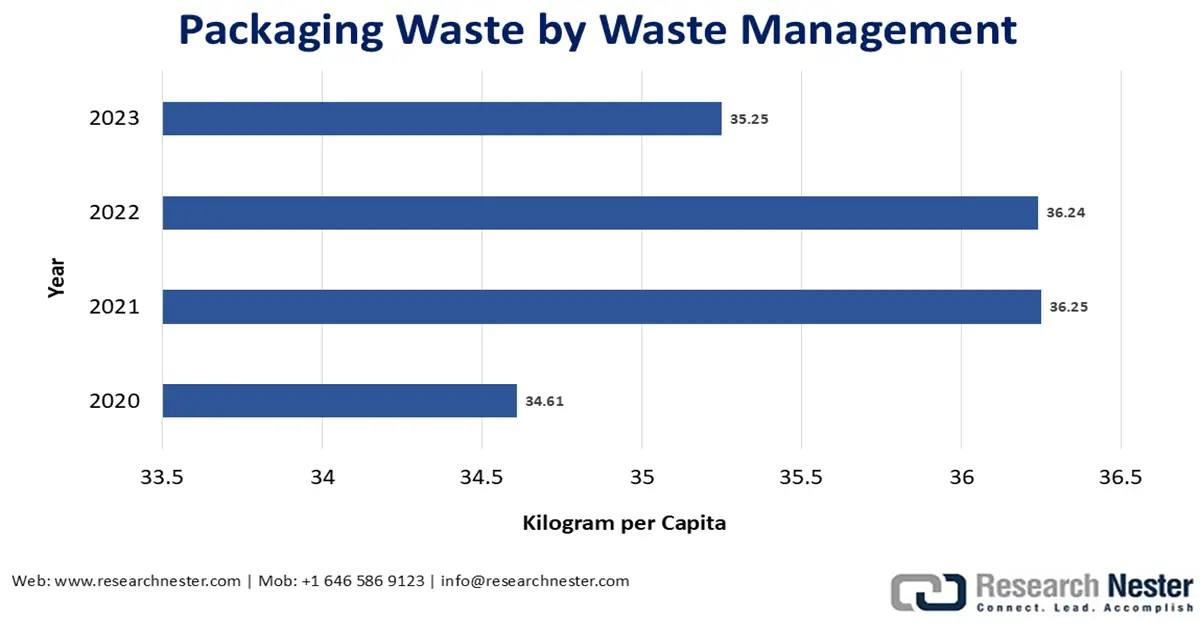
At the same time, the regulatory and procurement pressures are reshaping material choices rather than reducing volume demand. The U.S. Environmental Protection Agency report in October 2025 depicts that nearly 82.2 million tons of containers and packaging municipal solid waste were generated, promoting the federal and state agencies to prioritize waste reduction, recyclability, and compostability in the public procurement framework. Multiple state and municipal governments have enacted restrictions on specific resin-based foodservice items, shifting the B2B purchasing toward fiber-based molded pulp and certified compostable alternatives without eliminating the disposable usage in high-traffic foodservice environments. In the EU, the Eurostat report in October 2025 depicts that the plastic packaging waste in 2023 was 35.25 kilograms per capita. The institutional buyers and government-funded food service programs are increasingly embedding material compliance and end of life criteria into the long term supply contracts, driving for the single use solutions.