Ergosterol Synthesis Inhibitors Market Outlook:
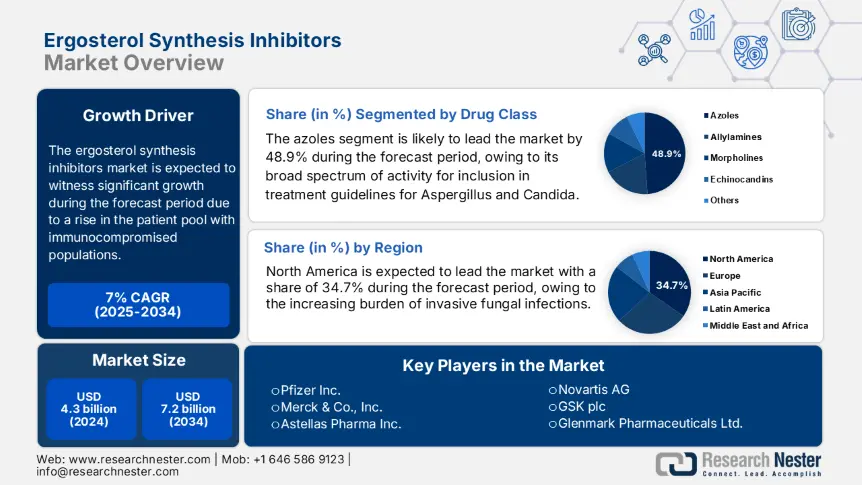
Ergosterol Synthesis Inhibitors Market size was valued at USD 4.3 billion in 2024 and is projected to reach USD 7.2 billion by the end of 2034, rising at a CAGR of 7% during the forecast period 2025-2034. In 2025, the industry size of ergosterol synthesis inhibitors is assessed at USD 4.4 billion in 2025.
The global ergosterol synthesis inhibitors market is continuously growing with the rise in the patient pool with immunocompromised populations, including transplant recipients, oncology patients, and individuals with HIV/AIDS. As per the Centers for Disease Control and Prevention (CDC) report, nearly 74,990 hospitals in the U.S. treat patients suffering from severe fungal infections, including Candida, Aspergillus, and Cryptococcus. Candida auris is a serious public health concern, with infections being reported across more than 35 countries, including the U.S., India, and South Africa. C. auris is listed as a critical priority pathogen by the World Health Organization (WHO), which further aids the clinical need for ongoing antifungal supply and innovation.
On the supply chain side, the manufacturing of ergosterol synthesis inhibitors relies significantly on the global movement of Active Pharmaceutical Ingredients (APIs), which are mainly obtained from India and China. Further, on the pricing view, the U.S. Producer Price Index (PPI) for pharmaceutical preparations increased by 2.6% in 2023 according to the U.S. Bureau of Labor Statistics (BLS), affecting upstream drug manufacturing costs. In contrast, the Consumer Price Index (CPI) for prescription medication crept up by 2.2% in the same period, fueled by inflation-adjusted price controls and rebate structures within public health programs. The market has seen increasing investments in research, development, and deployment (RDD), especially in antifungal-resistant strain targeting.