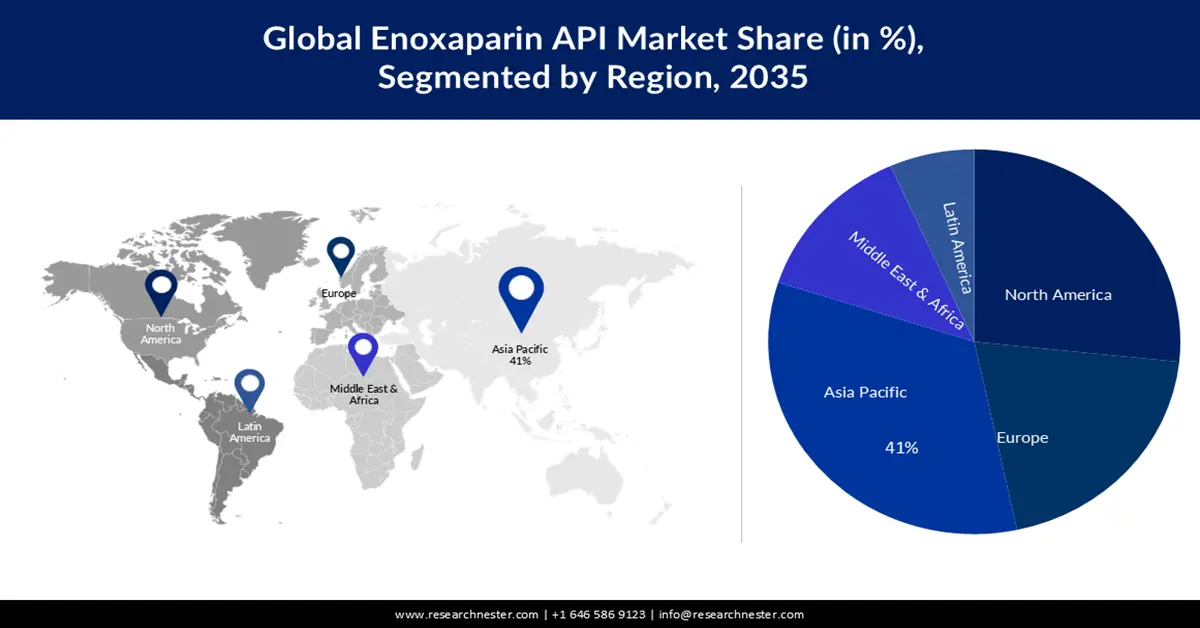
Enoxaparin API Market - Regional Analysis
APAC Market Insights
Asia Pacific industry is anticipated to account for largest revenue share of 41% by 2035. The adoption of Western lifestyles in the Asia Pacific region, characterized by sedentary habits and unhealthy diets, contributes to the rising incidence of cardiovascular diseases and thrombotic disorders. This lifestyle shift drives the demand for anticoagulant therapies like Enoxaparin to address associated health risks. A study published in the Lancet Diabetes & Endocrinology journal highlights the impact of Western dietary patterns on cardiovascular health in the Asia Pacific region. The adoption of diets high in saturated fats and low in physical activity contributes to the increasing prevalence of cardiovascular risk factors, emphasizing the need for anticoagulant interventions. The growing prevalence of cancer in the Asia Pacific region is a significant growth driver for the market. Cancer patients are at an increased risk of developing thrombotic complications, and Enoxaparin is widely used for the prevention and treatment of cancer-associated thrombosis. It is reported that the incidence of cancer is expected to rise by approximately 40% in the Asia Pacific region by 2030.
North American Market Insights
The enoxaparin API market in the North America region is projected to hold the second largest share during the forecast period. A major growth driver for the market in North America is the high prevalence of cardiovascular diseases. The region has a significant burden of conditions like deep vein thrombosis (DVT) and pulmonary embolism (PE), necessitating the use of anticoagulants like Enoxaparin. The surge in orthopedic surgeries and joint replacements is a notable growth driver for the market in North America. Enoxaparin is commonly prescribed for its anticoagulant properties in postoperative care, particularly for patients undergoing orthopedic procedures. The growing aging population in North America is a key growth driver for the market. As individuals age, the risk of cardiovascular diseases and thrombotic events increases, necessitating the use of anticoagulants for both treatment and prevention.