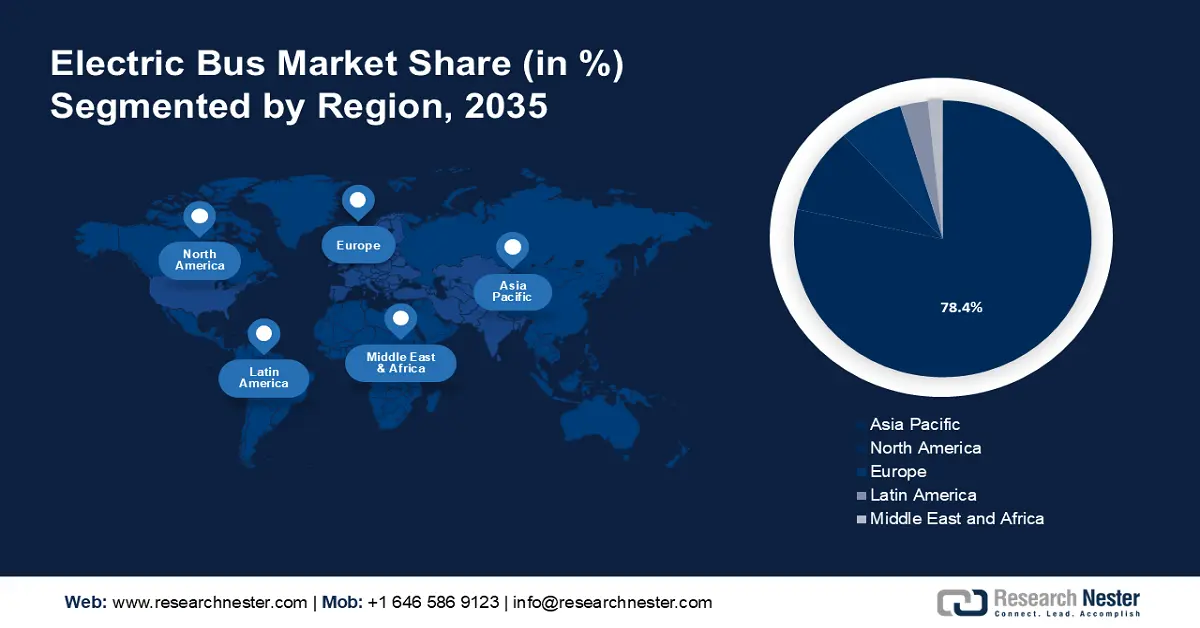
Electric bus Market Regional Analysis:
Asia Pacific Market Insights
Asia Pacific region is set to dominate around 78.4% market share by 2035, fueled by e-bus adoption for emission reduction and public transit upgrades. According to the World Bank (report from December 2023), the region accounts for 39% of the greenhouse gas emissions in the world. The e-buses are eliminating this problem by increasing their efficiency of the vehicles, which is accelerating the market growth.
Furthermore, there has been a growing introduction and deployment of the electric vehicles in public transportation, as it is cheaper to travel daily for work, school, or college compared to other conventional methods. For instance, in December 2024, Tata Motors started electric bus services for the workforce transportation at its plant in Uttarakhand. Such initiatives by organizations are creating immense avenues for the market.
The China electric bus market is dominating the global industry, owing to the presence of a robust EV manufacturing sector. Major organizations are significantly investing in research and development to enhance the range of e-buses and to make them more cost-effective. The strong shift towards zero emissions is enabling the production of these vehicles at competitive prices. As per the report from the International Council on Clean Transportation, the sales of electric buses and trucks reached more than 2,30,000 units in 2024, in China. The sales are ensuring the development of necessary infrastructure, including charging stations, and fostering market growth.
North America Market Insights
The electric bus market in North America is set to experience significant growth during the forecast period, driven by strict environmental regulations. Governments in Canada and the U.S. are setting tighter air quality standards, which are driving public green vehicles to adopt cleaner means of transportation. Also, there is an increasing establishment of charging networks for the streamlined integration of electric transport facilities into daily operations. According to the Federal Highway Administration in August 2024, currently, there are more than 192,000 charging ports in the U.S., with the addition of nearly 1,000 new public chargers every week. This expansion of charging infrastructure is improving the feasibility of operating electric buses and is providing long-term confidence for private as well as public sector investments in electric mobility.
The market in the U.S. is projected to grow significantly, with the expansion of e-buses by major transit agencies. Several cities in the country are electrifying their public transportation systems for an eco-friendly ecosystem, and these transitions are being supported by governmental investments. There is an increased demand for more charging stations, with more adoption of electric buses by the transit authorities, which is further fueling the electric bus ecosystem. Another factor driving the market growth is the surge in demand for cleaner air and a healthier environment.