Earthworm Farming Market Outlook:
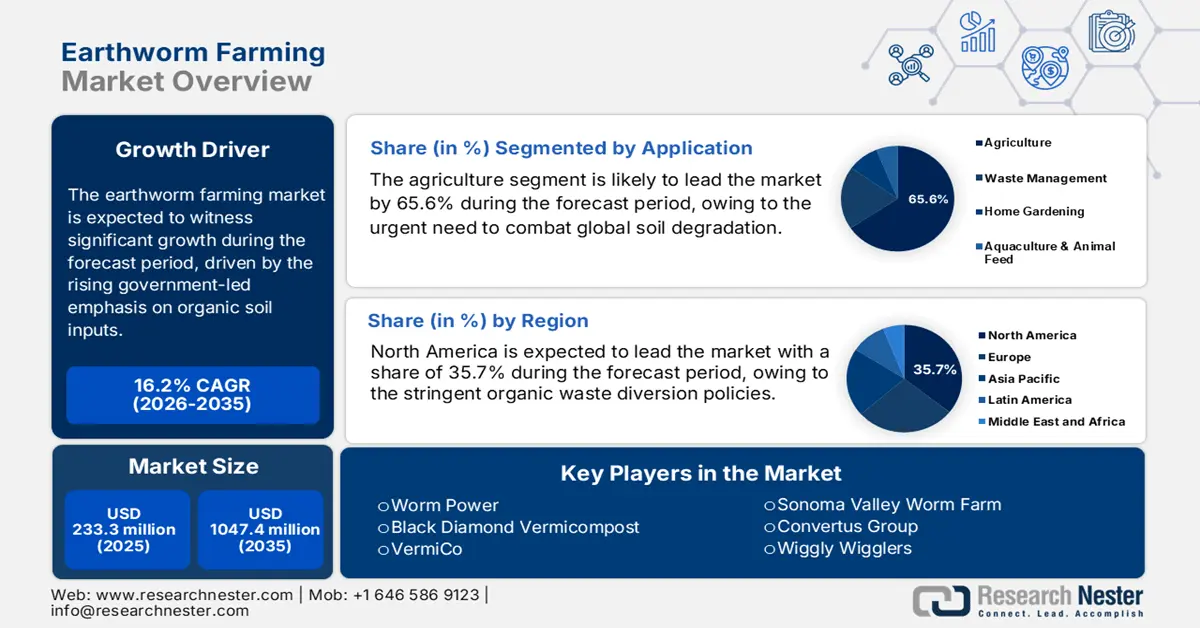
Earthworm Farming Market size was valued at USD 233.3 million in 2025 and is projected to reach USD 1047.4 million by the end of 2035, rising at a CAGR of 16.2% during the forecast period, i.e., 2026-2035. In 2026, the industry size of earthworm farming is estimated at USD 271.2 million.
The earthworm farming market is growing rapidly and is fueled due to the rising government-led emphasis on organic soil inputs, supported by the verified increases in the demand for natural soil conditioners. The report from the FiBL & IFOAM - Organics International in 2025 has stated that the global organic agriculture is in steady progress and the organic farmland has expanded to nearly 99 million hectares with a notable surge in regions such as Europe, Africa, North America, Latin America, and Oceania. The number of organic producers has decreased by 4% due to the reductions in Thailand and India. This expansion of the certified organic farmland directly corresponds to a larger addressable market for the compliant soil inputs, such as vermicompost. The consolidation of producers decreases in their total number indicates a trend toward larger, more commercially oriented organic operations.
On the trade front, the total organic exports to the U.S. surged while the imports declined. Despite the economic pressures and challenges, the global retail sales of organic products increased to over 136 billion euros, based on the FiBL & IFOAM - Organics International in 2025 data. Further, the World Bank data in January 2025 depicts that the cumulative fertilizer exports from China in August 2024 reached 2.87 million metric tons. This figure highlights the competitive landscape and volume of the broader soil amendment market in which earthworm-based products operate. This competitive pressure necessitates that earthworm farming operations demonstrate a clear cost-benefit advantage over the conventional alternatives to gain earthworm farming market share. Strategic focus on local and regional supply chains can reduce the challenges while capitalizing on the demand for specialized, high-efficacy organic inputs.