E-commerce Apparel Market Outlook:
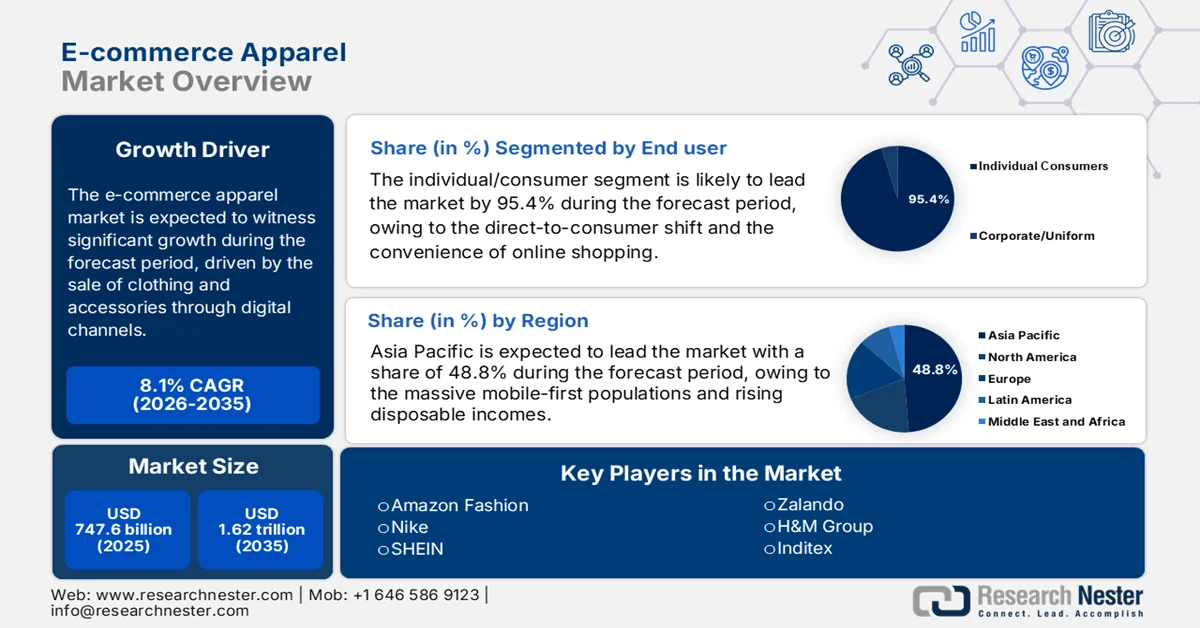
E-commerce Apparel Market size was valued at USD 747.6 billion in 2025 and is projected to reach USD 1.62 trillion by the end of 2035, rising at a CAGR of 8.1% during the forecast period, i.e., 2026-2035. In 2026, the industry size of e-commerce apparel is evaluated at USD 808.1 billion.
E-commerce has become a structurally important channel for the apparel sector, reshaping the wholesale-to-retail flows, inventory planning, and cross-border sourcing. The international market represents a fundamental and growing segment of the overall retail economy, characterized by the sale of clothing and accessories through digital channels. This rise is driven by the rising usage of smartphones and the internet by people. According to the U.S. Census Bureau report in February 2024, data from 2023, e-commerce accounted for the 15.6% of the total retail sales, underscoring the sustained channel shift rather than a temporary surge. This transition necessitates that businesses develop robust digital infrastructure, including a logistics payment system, to meet the demand and competitiveness.
Similarly, the UN Trade and Development June 2024 data depicts that the e-commerce sales in 2022 were nearly USD 27 trillion, with the business-to-consumer transactions representing 40% of GDP in the developed countries, a share driven largely by consumer goods such as apparel. The World Trade Organization shows that cross-border e-commerce has lowered the entry barriers for apparel exporters in developing nations, mainly in Asia, by minimizing the reliance on physical retail networks. Besides the integration of advanced technologies for inventory management, personalized customer engagement, and efficient last-mile delivery are now considered baseline requirements for business operations in this space, rather than differentiators. Moreover, the public sector investments in digital trade infrastructure and payments interoperability continue to support the growth in online apparel transactions across the domestic and export-oriented supply chains.