Digital Biomarkers Market - Regional Analysis
North America Market Insights
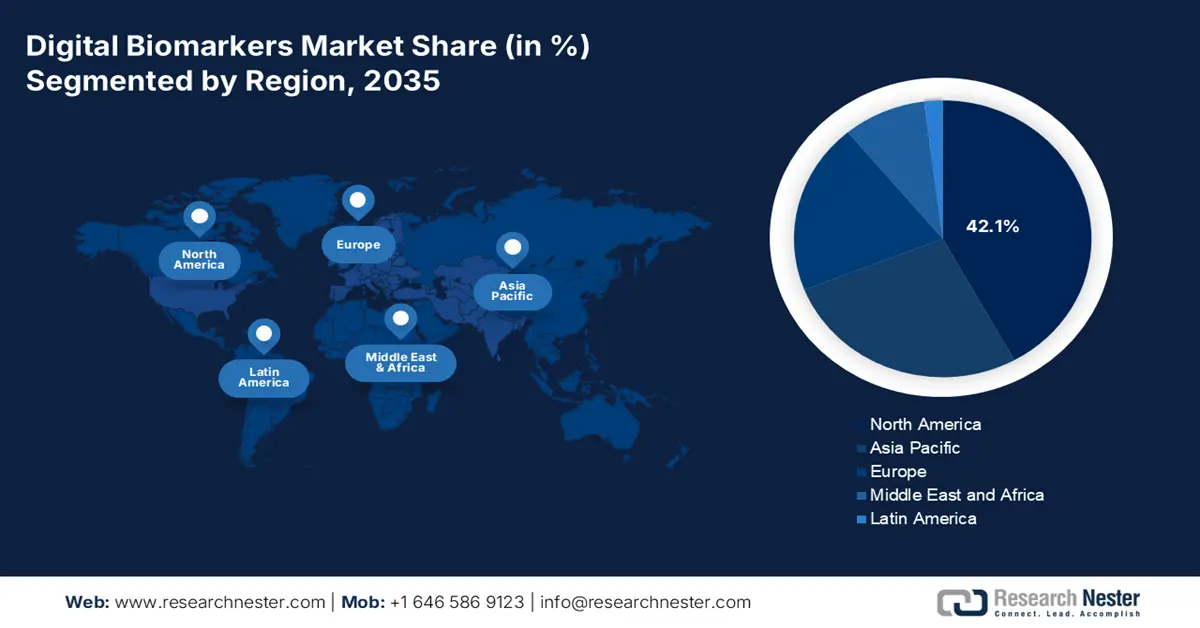
North America is expected to gain the largest share of 42.1% in the digital biomarkers market by the end of 2035. The robust institutional and consortium support is a major growth-promoting factor for the market in the region. The widespread adoption of smartphones and wearables renders a strong technological base for the large-scale collection of data. The region is one of the most favorable markets for the growth of the digital biomarker, as there is a huge focus on privacy and equitable utilization for the wider social acceptance.
The U.S. dominates the regional market on account of unparalleled public and private spending on AI-driven healthcare solutions. Further, reformed policies, such as the CHIPS and Science Act tax incentives, are boosting the medical devices production capacity in the country. Additionally, the regulatory engagements with the FDA are also creating pathways for the swift approval and widespread utilization of the digital endpoints in conducting clinical trials. According to the survey conducted by the American Cancer Society in 2023, 77% cancer patients stated that biomarker testing helped in better treatment. These factors are augmenting the market growth in the coming decade.
APAC Market Insights
Asia Pacific is poised to establish its position as the fastest-growing digital biomarkers sector globally during the analyzed tenure. The favorable demographic shifts and proactive government policies are creating new opportunities for this merchandise. In China, the market growth is propelled by a massive patient pool, and substantial government investment in AI healthcare infrastructure is consolidating this leadership. Also, the rapid adoption of AI in the hospital infrastructure in the country is resulting in the increased demand for digital biomarkers.
India is propagating as the epicenter of widespread adoption in the regional digital biomarkers market, offering lucrative opportunities for affordable models. In March 2025, scientists from India joined hands with the UK to conduct research by integrating cutting-edge technologies that include blood-based biomarkers. The partnership endeavors to comprehend and prevent cognitive decline with age. Moreover, the growing awareness about the importance of AI-based imaging biomarkers and remote diagnostics in bridging healthcare gaps in rural and urban populations is fostering a strong foundation for the country in this sector.
Europe Market Insights
The Europe digital biomarkers market is growing at a steady pace, which is stimulated by regulatory tailwinds and demographic demands. The regulatory momentum in the region is also propelling the market growth, and with the advent of the region’s new Medical Device Regulation (MDR), there will be clear pathways for the approval of digital health. Also, digital health programs are receiving funding from all across the nations in EU, alongside the burgeoning investment in healthcare IT. These factors are empowering established players as well as startups to scale the solutions associated with the digital biomarkers.
Germany is maintaining its proprietorship over the Europe market with accelerated adoption through regulatory mandates and measurable clinical impact. The nation's disease-specific mandates under Medical Device Regulation (MDR) alignment make it both a compliance benchmark and a clinical effectiveness proving ground. Academic research communities such as Fraunhofer ISST are putting efforts into developing digital value chains. This is to track sclerosis rehabilitation and obtain a blueprint for converting data from wearable devices into actionable digital biomarkers. This type of research is augmenting the market growth in the coming period.