Defibrillators Market Outlook:
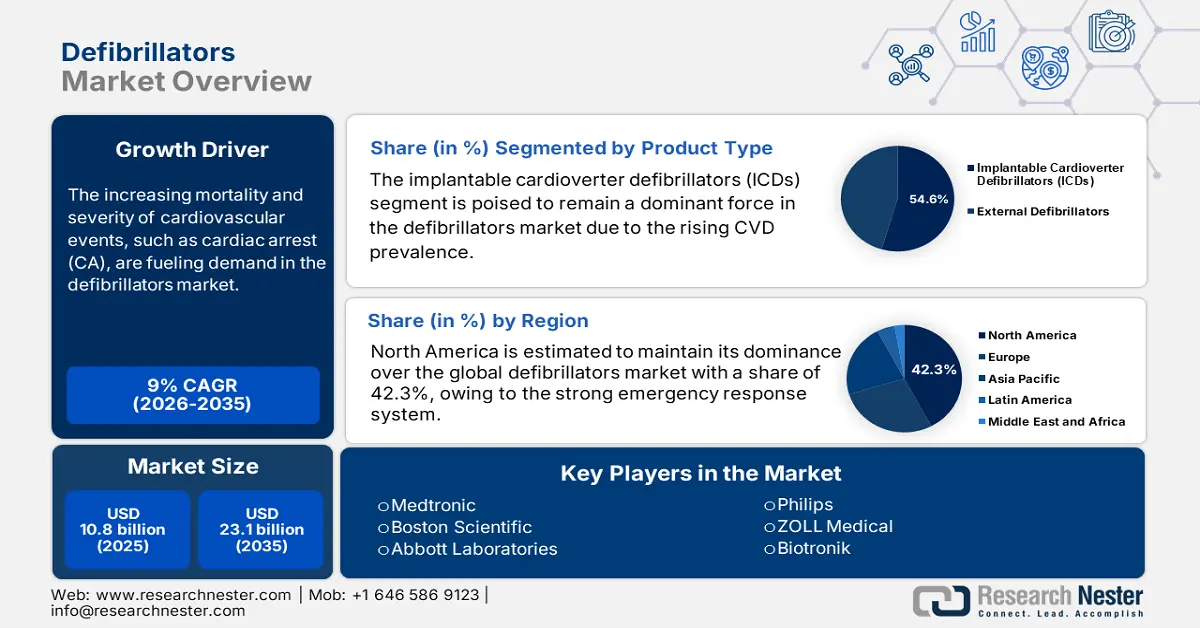
Defibrillators Market size was valued at USD 10.8 billion in 2025 and is estimated to reach USD 23.1 billion by the end of 2035, expanding at a CAGR of 9% during the forecast timeline, from, 2026-2035. In 2026, the industry size of defibrillators is assessed at USD 11.7 billion.
The increasing mortality and severity of cardiovascular events, such as cardiac arrest (CA), are fueling demand in the market. According to a 2023 report from the American Heart Association (AHA), the annual incidence rate of CA around the globe ranged between 30 and 97 per 100 thousand. Another 2022 NLM article unveiled that approximately 20% of deaths in Western societies in the world are caused by CA. As evidence, in Australia and New Zealand alone, the yearly occurrence of this condition surpassed 26 thousand, as per the 2024 Journal of Heart, Lung and Circulation. The volume of the patient pool is further amplified by the growing burden of cardiovascular diseases (CVD). In this regard, the NLM predicted the CVD global prevalence to increase by 90.0% between 2025 and 2050.
The consistent inflation in payers’ pricing remains a hurdle to widespread adoption in the market. This can be testified by the range of a single unit lying between £0.8 thousand and £2.5 thousand, which varies according to the design and offerings. Additionally, the purchase of these tools comes along with a £20-300 pads and battery replacement charges, as per the St. John Ambulance. This testifies to the urgent need for the development and commercialization of affordable solutions that can minimize the disparity. However, the cost-effectiveness of defibrillators often gains dominance over their expense due to the growing trend of accepting value-based healthcare models. Besides, strategic placement and procurement are enhancing both the quality of life and willingness-to-pay among patients.