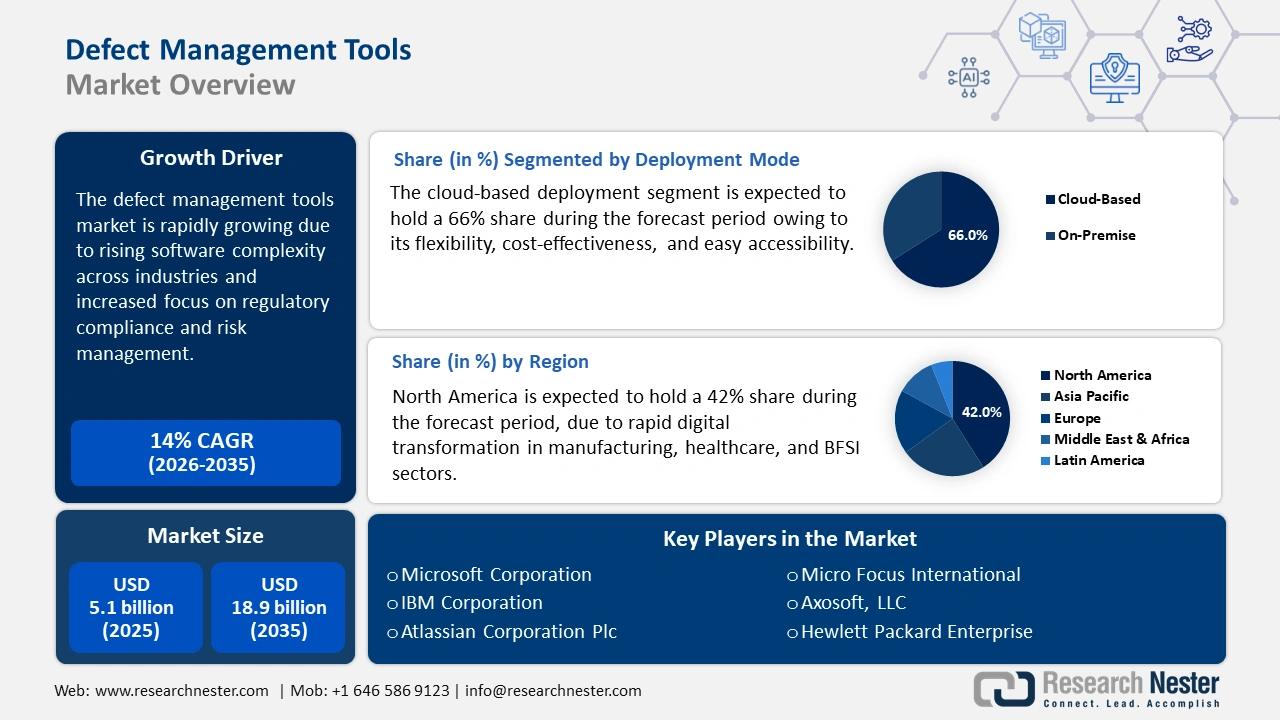
Defect Management Tools Market Outlook:
Defect Management Tools Market size is valued at USD 5.1 billion in 2025 and is projected to reach a valuation of USD 18.9 billion by the end of 2035, rising at a CAGR of 14% during the forecast period, i.e., 2026-2035. In 2026, the industry size of defect management tools is estimated at USD 5.8 billion.
The defect management tool market is strategically positioned for robust growth, which is primarily fueled by the growing adoption of DevOps practices and the need to maintain quality checks continuously in fast-release cycles. The key opportunity lies in leveraging cutting-edge technologies like Artificial Intelligence (AI) for automating defect triage, predicting failures, and making transparent cross-functional processes. In August 2025, the Press Information Bureau in India released a factsheet underscoring its commitment to secure, high-quality digital services. This factsheet details initiatives like the Digital Service Standard framework and the utilization of the National Cybercrime Reporting Portal, both aimed at empowering governance through digital infrastructure and combating fraudulent communications and cybercrime.
The market is shifting from simple bug tracking to full-fledged Defect Lifecycle Management (DLM) solutions that provide end-to-end auditability within the company. Increasing software sophistication, particularly in regulated industries like finance and healthcare, ensures continued demand for products that have strong audit trails and compliance automation features. Such increased scrutiny is also seen in public sector IT, where, in May 2025, the UK's new Software Vendor Code for government procurement requires the employment of secure, auditable defect management, accelerated patching, and public disclosure procedures for severe vulnerabilities and problems.