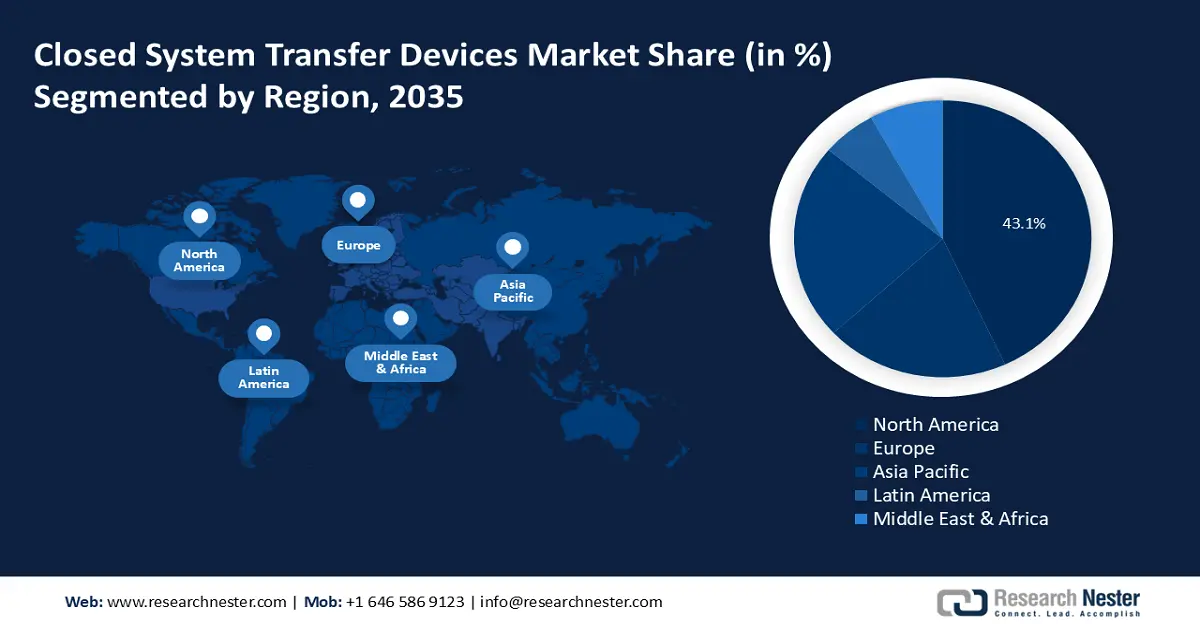
Closed System Transfer Devices Market Regional Analysis:
North American Market Insights
North America region is expected to account for more than 43.1% market share by 2035, attributed to the higher use of antineoplastics for cancer treatment, backed by the availability of advanced healthcare facilities. According to the data from the American Cancer Society, about 1.9 million new cancer cases and 693,000 cancer deaths were recorded in Northern America in 2018. North America is one of the most technologically advanced regions globally, with a high adoption rate of advanced medical technologies, including closed-system transfer devices. Such factors are estimated to boost the demand for the closed system transfer devices market in the region.
APAC Market Insights
The closed system transfer devices market in the Asia Pacific region is estimated to witness noteworthy growth over the forecast period, attributed to the back of increasing prevalence of cancer in low- and middle-income nations. As per a report by WHO, cancer is the second leading cause of death after CVD in the Asia Pacific region. Additionally, growing investment in healthcare infrastructure, an increase in total, population, and a rise in facilities offering closed system transfer device services are further expected to drive the growth of this market in the forecast period. The demand for personalized medicine is increasing in the Asia Pacific region, which requires the use of hazardous drugs.
Europe Market Forecast
The closed system transfer device market in Europe region is anticipated to see a significant market share in the forecast period, attributed owing to increasing awareness of the risks associated with hazardous drugs and a growing demand for advanced medical technologies. Healthcare professionals in Europe are becoming more aware of the risks associated with occupational exposure to hazardous drugs and are increasingly adopting CSTDs to reduce their risks. The European Union (EU) has regulations in place to protect healthcare workers from exposure to hazardous drugs, which has led to high adoption rates of CSTDs in the region. These factors are further expected to drive the growth of this market in the Europe region.