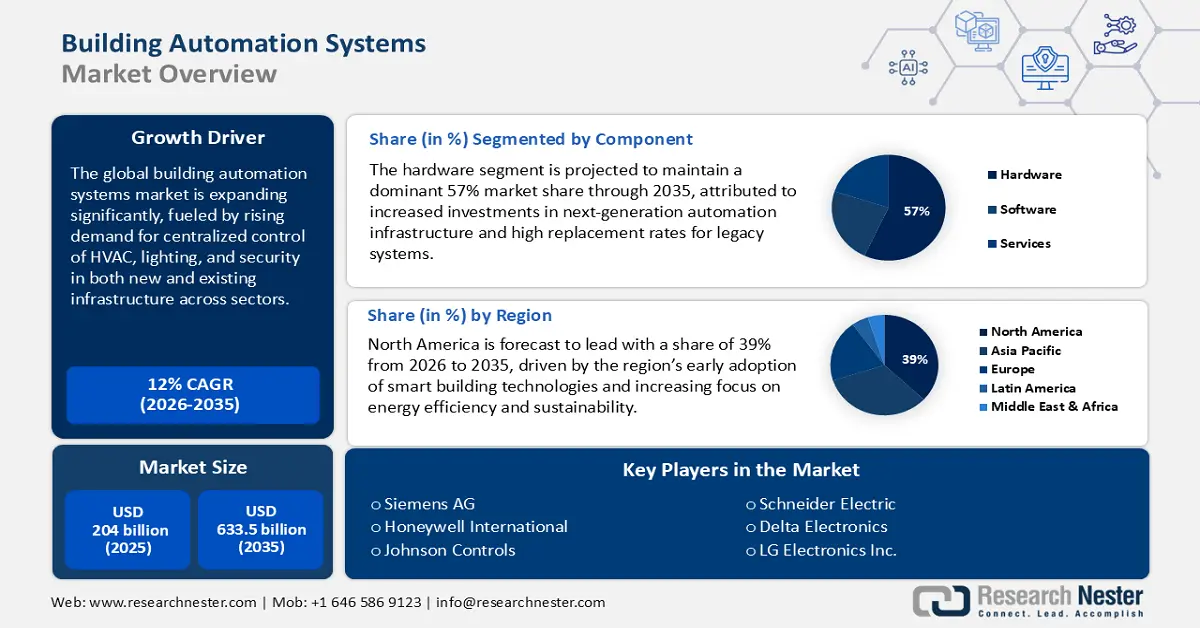
Building Automation Systems Market Outlook:
Building Automation Systems Market size is valued at USD 204 billion in 2025 and is projected to reach a valuation of USD 633.5 billion by the end of 2035, rising at a CAGR of 12% during the forecast period, i.e., 2026-2035. In 2026, the industry size of building automation systems is anticipated to reach USD 228.4 billion.
The building automation systems (BAS) industry is being transformed through the convergence of operational efficiency goals, energy management requirements, and sustainability needs. The expansion is characterized by a shift from standalone controls to networked, intelligent platforms that provide integrated management of HVAC, lighting, and security. Highlighting the trend, Honeywell rolled out its Advanced Control for Buildings platform in January 2024, a solution that marries machine learning with an installed building wiring to achieve performance without human oversight and enhance cybersecurity. The move is a hallmark of the industry's focus on creating smarter, more resilient commercial and institutional buildings.
Government action and regulatory mandates are equally powerful drivers powering the marketplace. Globally, energy efficiency and greenhouse gas reduction policies are compelling building owners to adopt advanced automation. A step in this direction is the U.S. General Services Administration's (GSA) September 2024 decision to standardize on Tridium's Niagara Framework for its building automation products. The initiative is to keep cybersecurity threats at bay and promote competition, signaling a broader public-sector trend toward secure, interoperable BAS platforms.