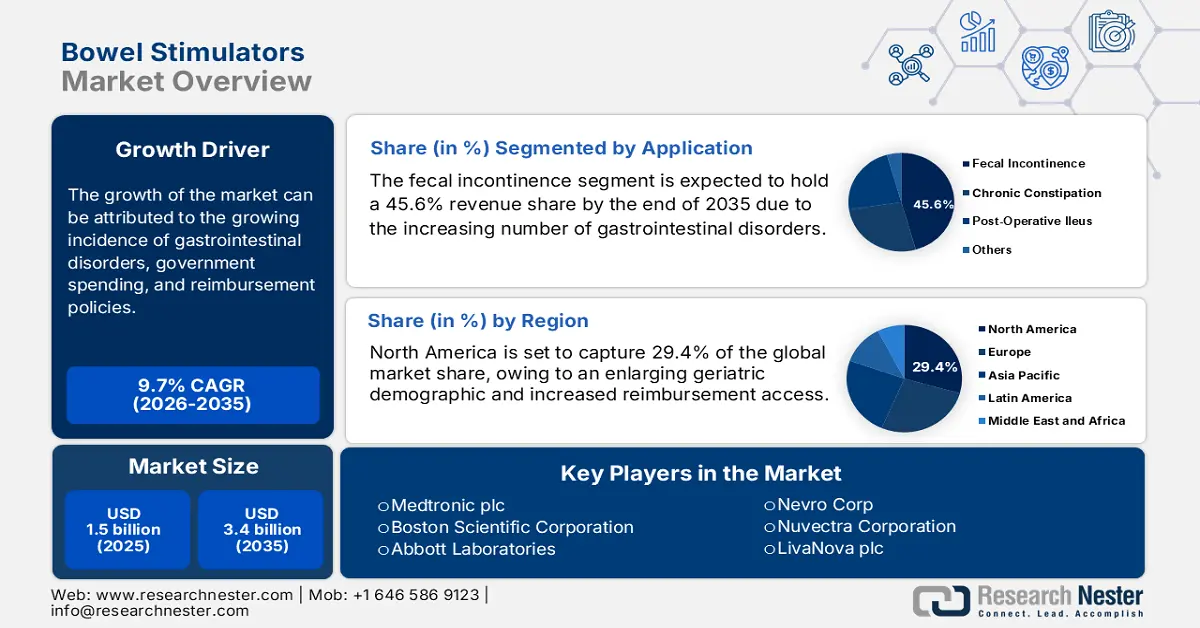
Bowel Stimulators Market Outlook:
Bowel Stimulators Market size was valued at USD 1.5 billion in 2025 and is projected to reach USD 3.4 billion by the end of 2035, rising at a CAGR of 9.7% during the forecast period, i.e., 2026-2035. In 2026, the industry size of bowel stimulators is estimated at USD 1.6 billion.
The bowel stimulators market is addressing a sizable population of people struggling with dysfunction in gastrointestinal movements. The demography consists of a wide range of disorders, including fecal incontinence, constipation, inflammatory bowel disease (IBD), and neurogenic bowel disorders, which is steadily rising with worldwide aging. Testifying to such a substantial epidemiology, a 2025 journal of Clinical Gastroenterology and Hepatology unveiled that more than 7.0 million people worldwide suffer from IBD, where its occurrence rate is steadily reaching 1% in certain industrialized regions, including Europe and North America. Besides, the increasing impact of chronic diseases, such as diabetes and spinal cord injuries, on the overall quality of life often results in bowel dysfunction.
Global trade dynamics in the bowel stimulators market are primarily controlled by imports and exports of raw materials and finished products. The inflationary cost of treating associated ailments also translates to a major hurdle in patient access. Evidencing the same, in a 2025 journal, the average direct health care expenses were calculated to be USD 9-12 thousand per person. On the other hand, the pricing landscape in this sector is increasingly influenced by policy changes in government insurance and private health plans. The competitive pricing pressures from emerging technologies and alternative therapies are further prompting manufacturers to adopt more flexible pricing strategies.