Blood Culture Tests Market Outlook:
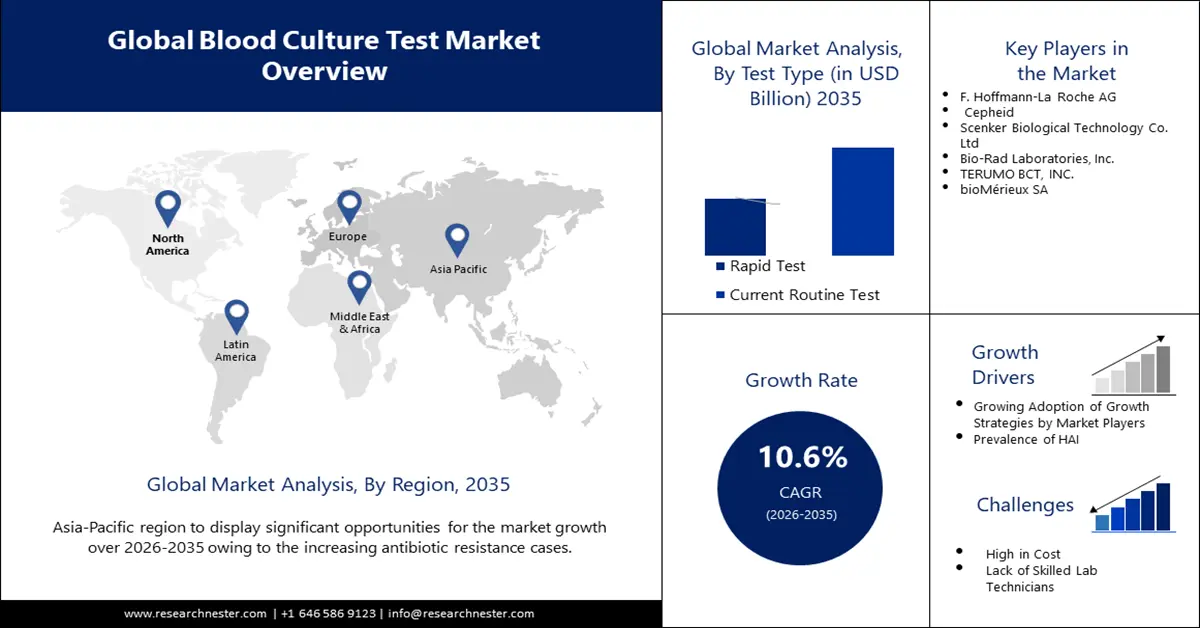
Blood Culture Tests Market size was valued at USD 6.83 billion in 2025 and is set to exceed USD 18.71 billion by 2035, expanding at over 10.6% CAGR during the forecast period i.e., between 2026-2035. In the year 2026, the industry size of blood culture tests is estimated at USD 7.48 billion.
Nosocomial infections are a major problem that requires global attention. A group of infections called HAIs are infections that the patient did not have before being admitted to the hospital. HAIs occur when a patient arrives at the hospital or 48 to 72 hours after admission. It doesn't even exist during waiting time. Currently, these diseases have become a serious problem for both medical institutions and the public, requiring increased medication and testing, prolonging treatment periods, and placing an unnecessary financial burden on patients and medical institutions. As a result, the demand for blood culture testing to investigate infectious diseases and the demand for blood culture testing market is increasing. According to a study by the Centers for Disease Control and Prevention, about 1 in 31 hospitalized patients in the United States suffers from a healthcare-associated infection.
Antibiotics are drugs used to prevent and treat infectious diseases in humans, animals, and plants. These include antibiotics, antiviral drugs, antifungal drugs, and antiparasitic drugs. Antibiotics and other antimicrobial drugs lose their effectiveness due to drug resistance, making infections difficult or impossible to treat and increasing the risk of disease transmission, serious illness, disability, and death. Blood culture tests are primarily used to detect microbial resistance. Most of the bacteria isolated from blood cultures were found to be multidrug-resistant, especially to first- and second-line antibiotics. Thus, growing cases of antimicrobial resistance are set to drive market growth in the upcoming period.