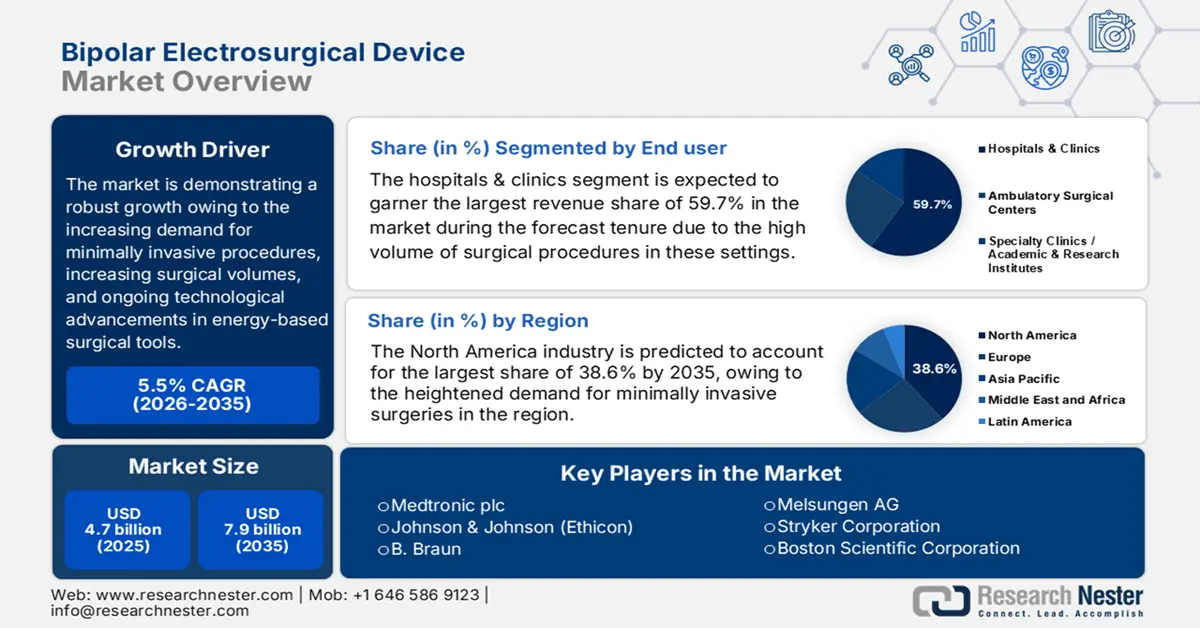
Bipolar Electrosurgical Device Market Outlook:
Bipolar Electrosurgical Device Market size was valued at USD 4.7 billion in 2025 and is projected to reach USD 7.9 billion by the end of 2035, rising at a CAGR of 5.5% during the forecast period, i.e., 2026-2035. In 2026, the industry size of bipolar electrosurgical devices is assessed at USD 5 billion.
The market is demonstrating a robust growth owing to the increasing demand for minimally invasive procedures, rising surgical volumes, and ongoing technological advancements in energy-based surgical tools. Since there is a constant rise in chronic disease burden, the need for minimally invasive surgical procedures also escalates. According to an article published by the Society of Gynecologic Oncology (SGO) in November 2024, there were around 114,810 new cases diagnosed and 34,020 mortalities as a result of gynecologic cancers in the U.S. in 2023. Hence, this epidemiological data underscores the presence of a reliable consumer base in the sector.
On the pricing and reimbursement front, the market is extremely benefited from the payers due to the cost-efficiency of the devices when compared to other traditional surgical technologies. Therefore, the article published by the National Institute of Health stated that switching to EES, including advanced bipolar and ultrasonic devices, resulted in annual savings of USD 824,760, especially due to reduced operating room time, shorter hospital stays, and lower disposable electrode usage. The model assumed price parity for advanced energy devices and included diverse surgical specialties such as colorectal, bariatric, gynecology, thoracic, and general surgery, hence highlighting the economic benefits of category-wide device adoption.