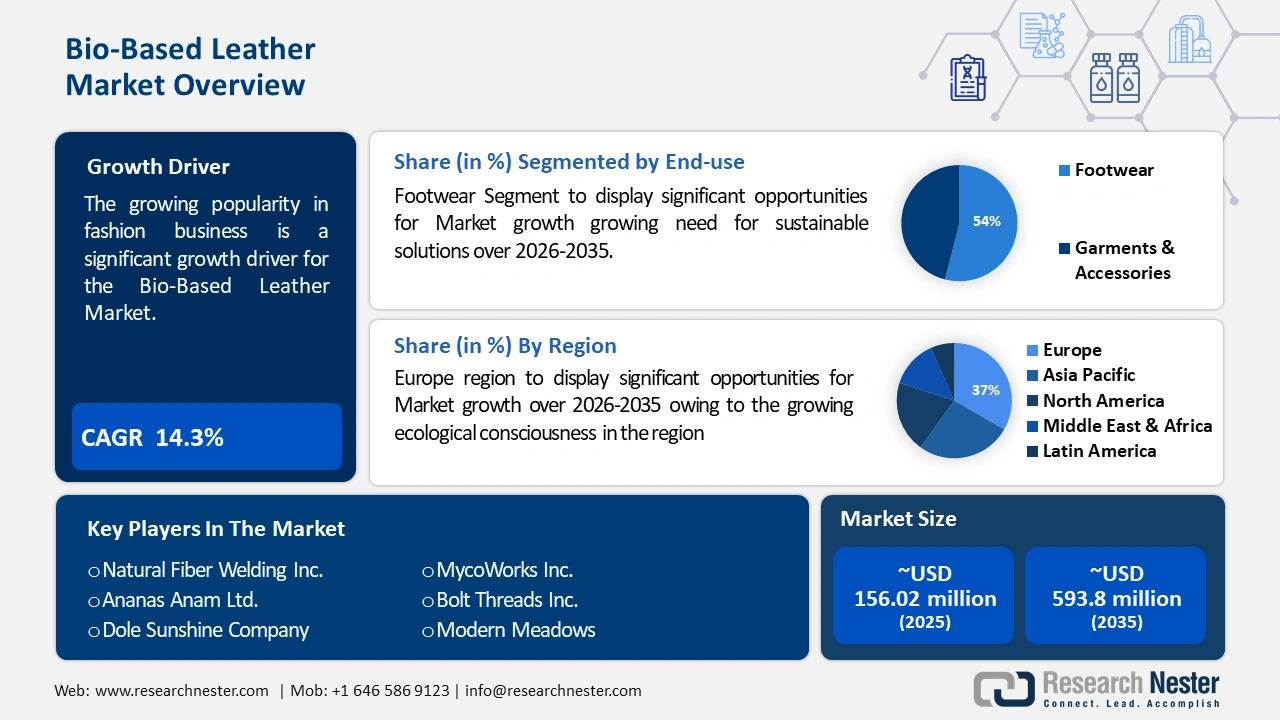
Bio-Based Leather Market Outlook:
Bio-Based Leather Market size was over USD 156.02 million in 2025 and is poised to exceed USD 593.8 million by 2035, witnessing over 14.3% CAGR during the forecast period i.e., between 2026-2035. In the year 2026, the industry size of bio-based leather is estimated at USD 176.1 million.
In the fashion business, bio-based leather is becoming more and more popular as a substitute for traditional leather materials in shoes, clothes, accessories, and other items. For instance, in 2020 Nike's garments utilised 59% more sustainable materials than in the previous year (41%). This change is motivated by the fact that conventional leather goods usually have residual chemicals that could result in allergies and sensitivity in certain individuals. Skin diseases such as rashes might arise from contact with these chemicals. Given the health hazards linked to chemicals, which have led to numerous nations imposing bans or limits on animal leather products due to an increasing number of health difficulties, the bio-based leather substitute is especially pertinent.
Furthermore, in addition to encouraging social responsibility, sustainable leather manufacturing makes sure that employees receive fair treatment and have safe and healthy working conditions. It encourages the application of moral procedures that consider the welfare of the environment, animals, and laborers. For this reason, it is impossible to overstate the significance of sustainability in the leather industry. Leather producers may lessen their environmental effect, encourage social responsibility, and create high-quality, secure leather goods by implementing sustainable techniques.