Beta Agonist Feed Additives Market Outlook:
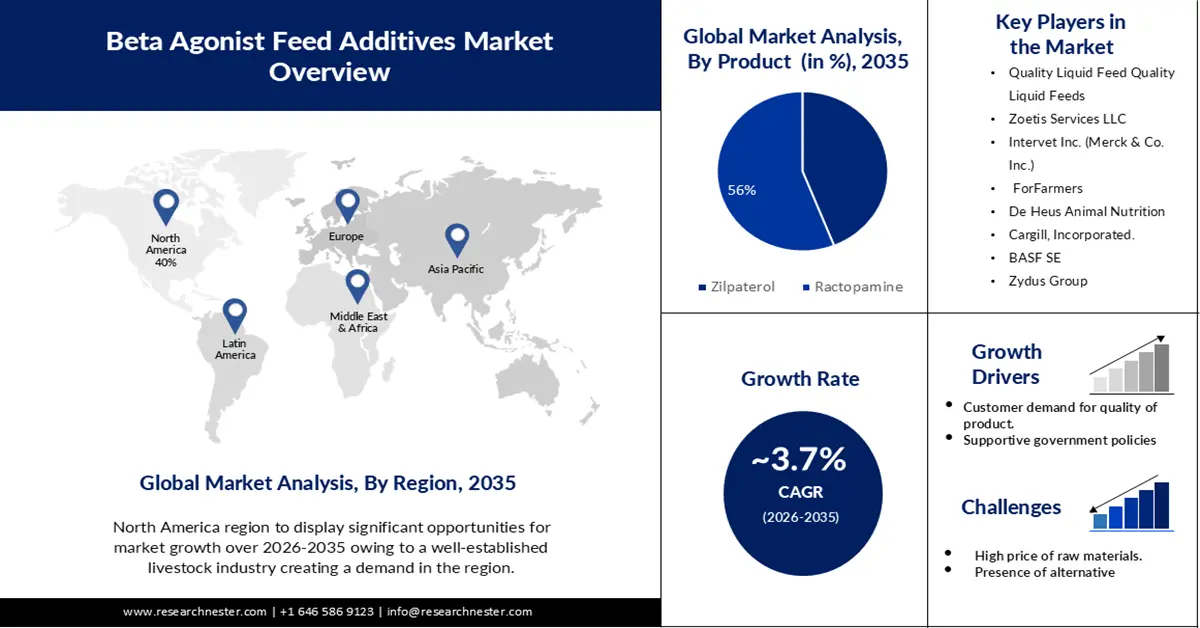
Beta Agonist Feed Additives Market size was over USD 94.98 billion in 2025 and is projected to reach USD 136.59 billion by 2035, witnessing around 3.7% CAGR during the forecast period i.e., between 2026-2035. In the year 2026, the industry size of beta agonist feed additives is assessed at USD 98.14 billion.
Escalating global demand for animal protein is propelling the market’s growth. As the population burgeons and dietary preferences shift, there’s an unprecedented surge in the need for meat products. Beta agonist feed additives stand as a solution to meet this demand, enhancing feed efficiency in livestock and poultry. They facilitate rapid weight gain, augment lean muscle development, and optimize feed utilization. This pivotal role in improving production efficiency addresses the pressing need to sustainably boost animal protein output, positioning Beta-agonists as a crucial element in meeting the world’s burgeoning appetite for protein-rich food sources.
Further, beta-agonist improves feed conversion rates in animals, enabling better utilization of feed resources. About 60–80% of fed cattle in the United States are estimated to have been grown using beta-agonists. As feed cost constitute a significant a significant portion of livestock production expenses, the use of these additives to enhance efficiency becomes essential for producers, driving the beta agonist feed additives market growth.