Behavior Analytics Market Outlook:
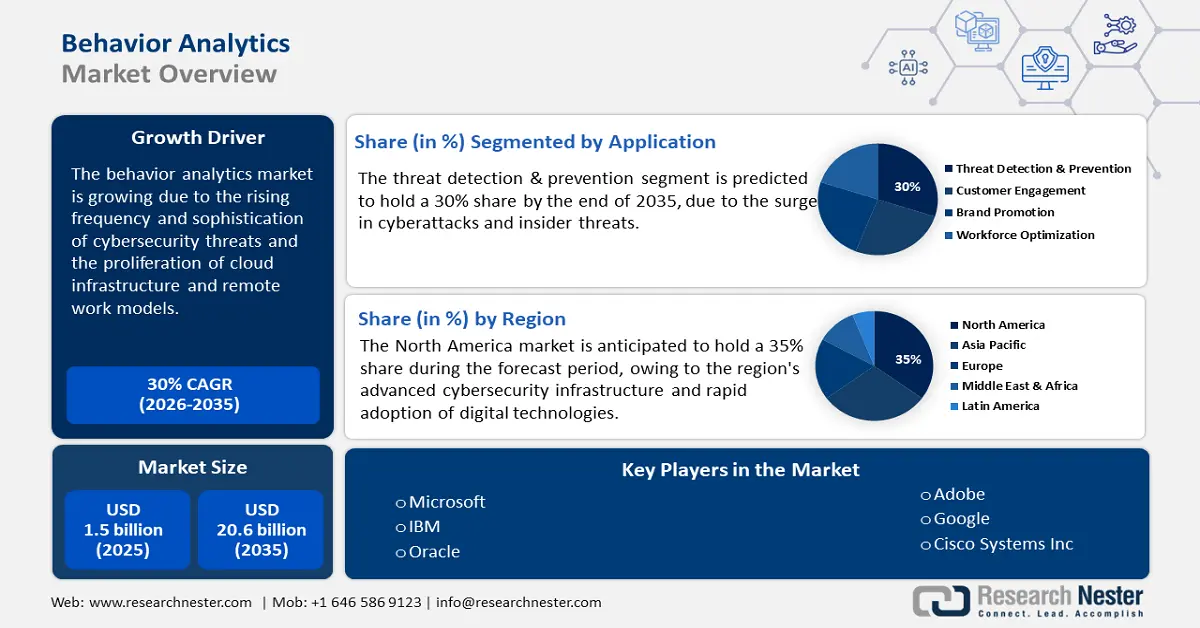
Behavior Analytics Market size was valued at USD 1.5 billion in 2025 and is projected to reach USD 20.6 billion by the end of 2035, rising at a CAGR of 30% during the forecast period, i.e., 2026-2035. In 2026, the industry size of behavior analytics is evaluated at USD 1.9 billion.
The rising frequency and sophistication of cybersecurity threats, especially insider risks and credential-based attacks, are key market drivers. Conventional security tools often fail to identify subtle, internal threats or misuse of legitimate credentials, leaving organizations vulnerable to breaches from within. Thus, behavior analytics addresses this gap by monitoring and analyzing user and entity behavior to detect anomalies that may indicate malicious intent. As insider threats continue to surge, corporations are increasingly adopting behavior analytics tools to enhance threat detection, minimize response time, and fulfill growing regulatory and compliance needs. The integration of these tools with large security ecosystems such as SIEM, SOAR, and cloud platforms further fuels their adoption, making behavior analytics a critical layer in modern cybersecurity strategies.
In May 2023, the European Union Agency for Cybersecurity (ENISA) reported that cybercriminals are constantly employing different ways to hack into systems through emails. For example, a harmful program called QBot, often used by criminals in ransomware attacks, is consistently evolving. During the same period, it was sent in ZIP folders with a special file (DLL) that exploits a weakness in Windows 10’s WordPad. To combat such challenges, the manufacturers are introducing next-gen behavior analytics solutions, and end users are also investing heavily in them.